Peak3
An enterprise website built for the marketing team to manage
Client
Peak3
Sector
Insurtech
Stage
Enterprise
Scope
Website design + CMS architecture
The stakes
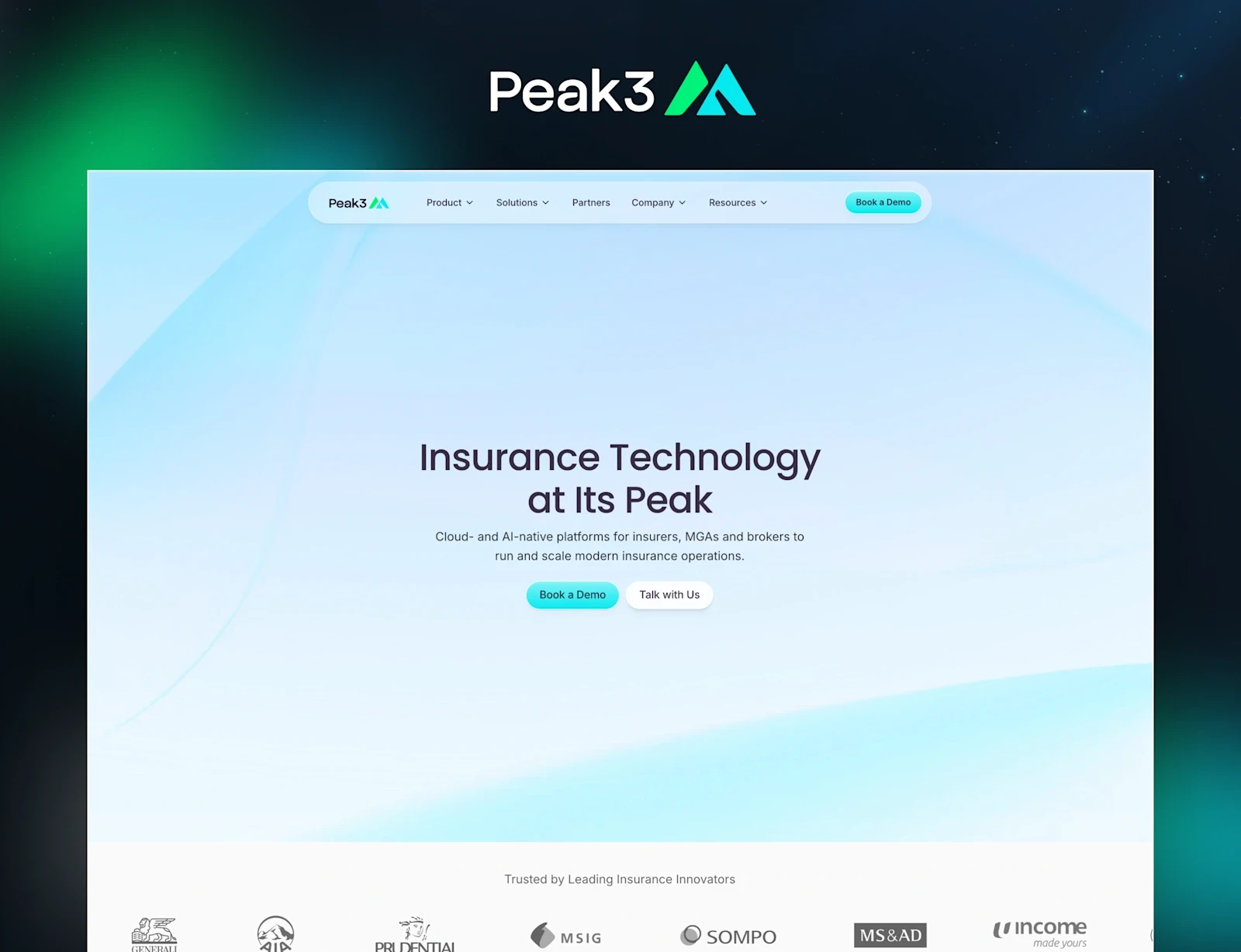
Following its rebrand from ZA Tech, Peak3 needed a website that could explain three insurance technology products and support a distributed marketing team.
The read
Product detail, customer evidence and resource publishing needed clear structures. Routine content updates also needed to work without design support.
The move
Build reusable page templates and structured CMS collections, with shared forms and HubSpot integration for the team’s publishing workflow.
A website for a broad product range
Peak3 provides insurance technology across three enterprise product lines. Following its rebrand from ZA Tech, the company needed a website that could explain the portfolio and support publishing by its teams in Singapore and Dublin.
Support visitors and the publishing team
The website had two jobs: explain the products clearly and make routine content updates manageable for the team.
The existing structure made product differences and supporting evidence hard to find. Updates also depended on design support. We needed a clearer way to organize product pages and a publishing structure that could handle the team’s different content types.
Start with the content structure
We planned the templates, collections and publishing workflow alongside the visual design.
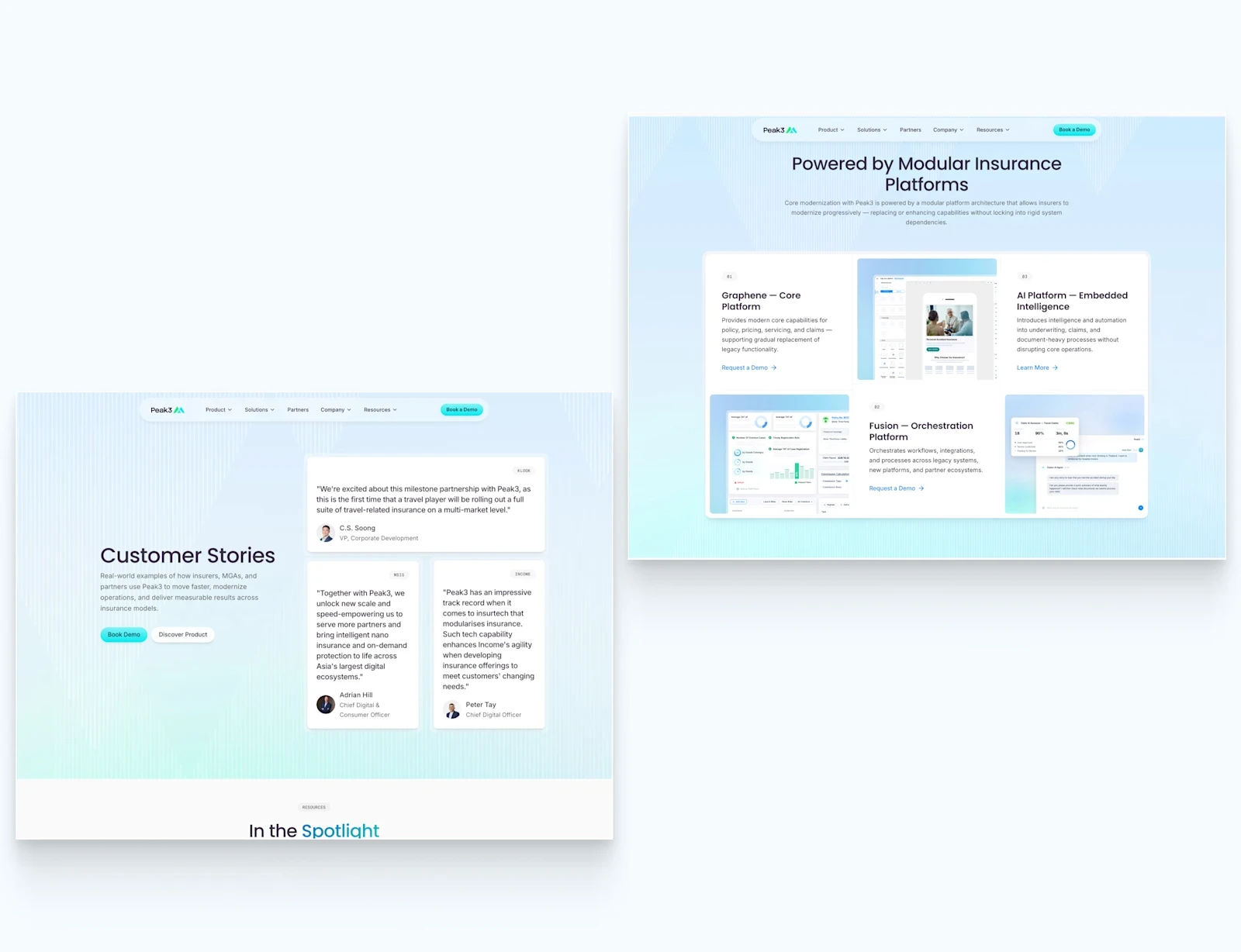
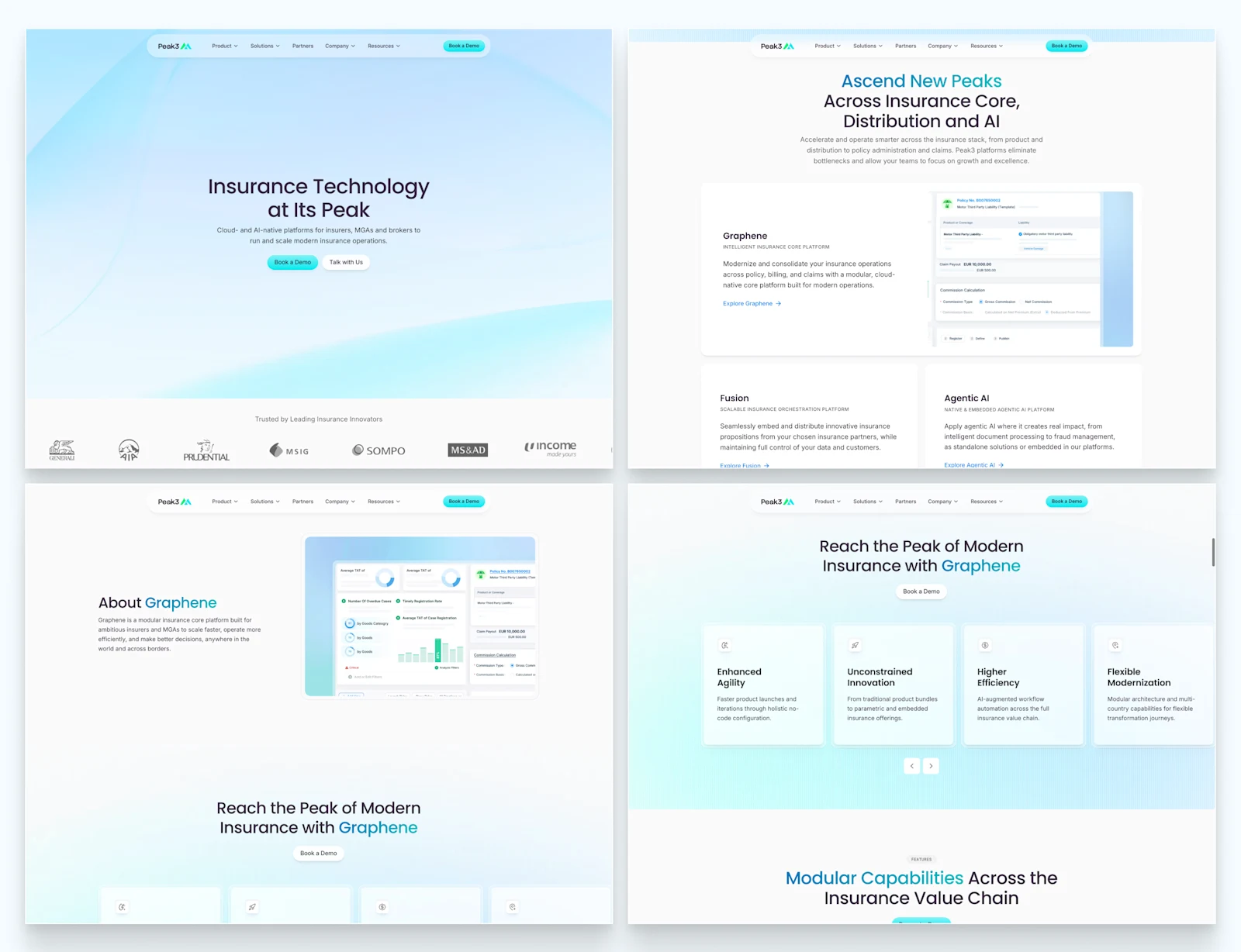
We built the site around a structured CMS: 17 page templates, 39 URLs, six CMS collections and three product lines, connected to HubSpot. The structure lets the team update content while the templates maintain the layout.
Reusable structures cover resource listings, product features, partner grids and editorial content, including blog posts, case studies, whitepapers, news, events and careers. A shared gated-content form supports the whitepapers, and each page type includes structured data for search.
The templates account for different content lengths and publishing needs, while shared components keep the pages visually consistent.
The handover was designed around the team’s ongoing use of the site: adding material, maintaining product information and reusing established layouts.
A site the team can maintain
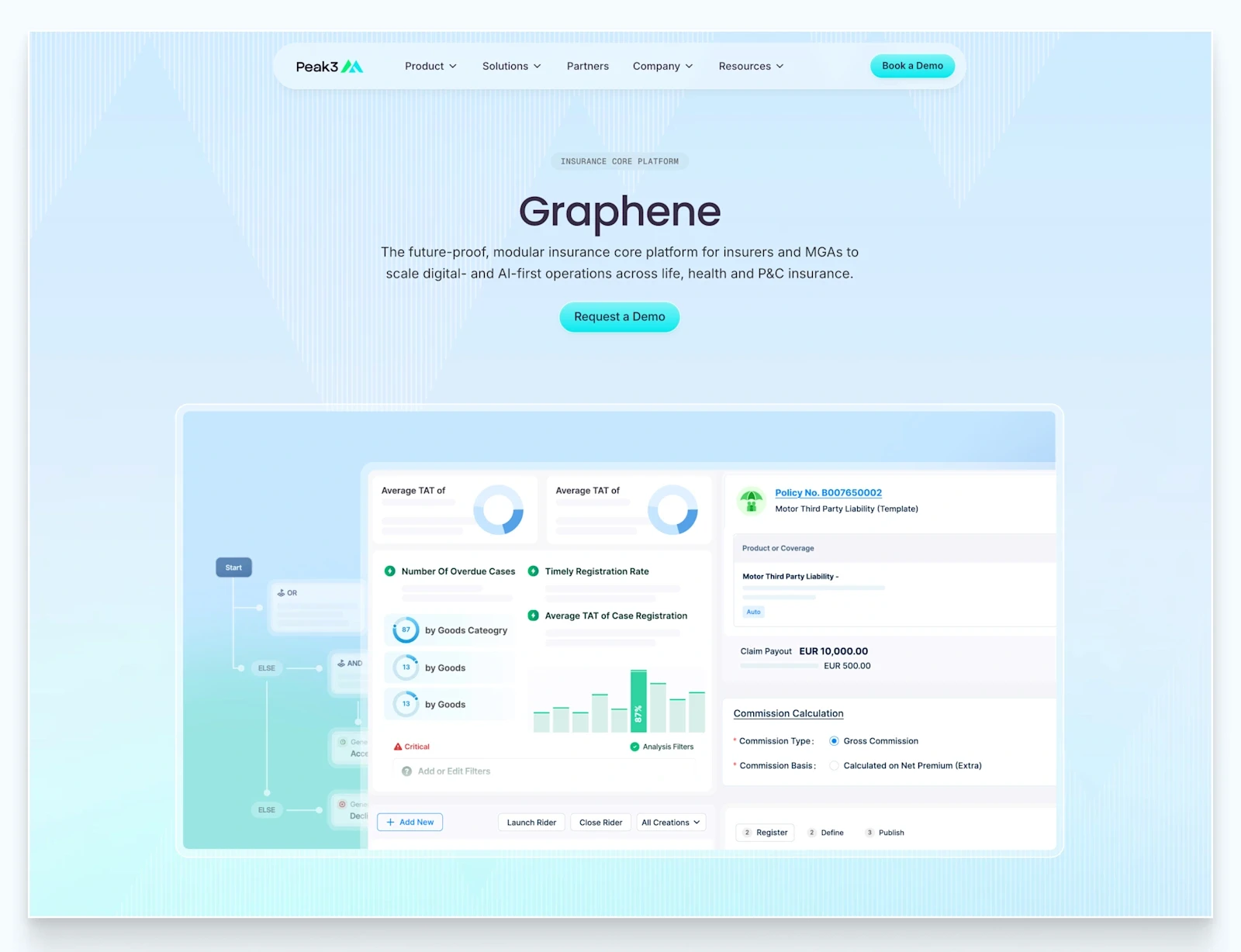
The delivered build gives Peak3’s team control over its case studies, blog posts and product updates through the CMS.
Each product has a dedicated page structure for detailed information. The same system supports resource publishing, so the team can keep product content and supporting material connected.
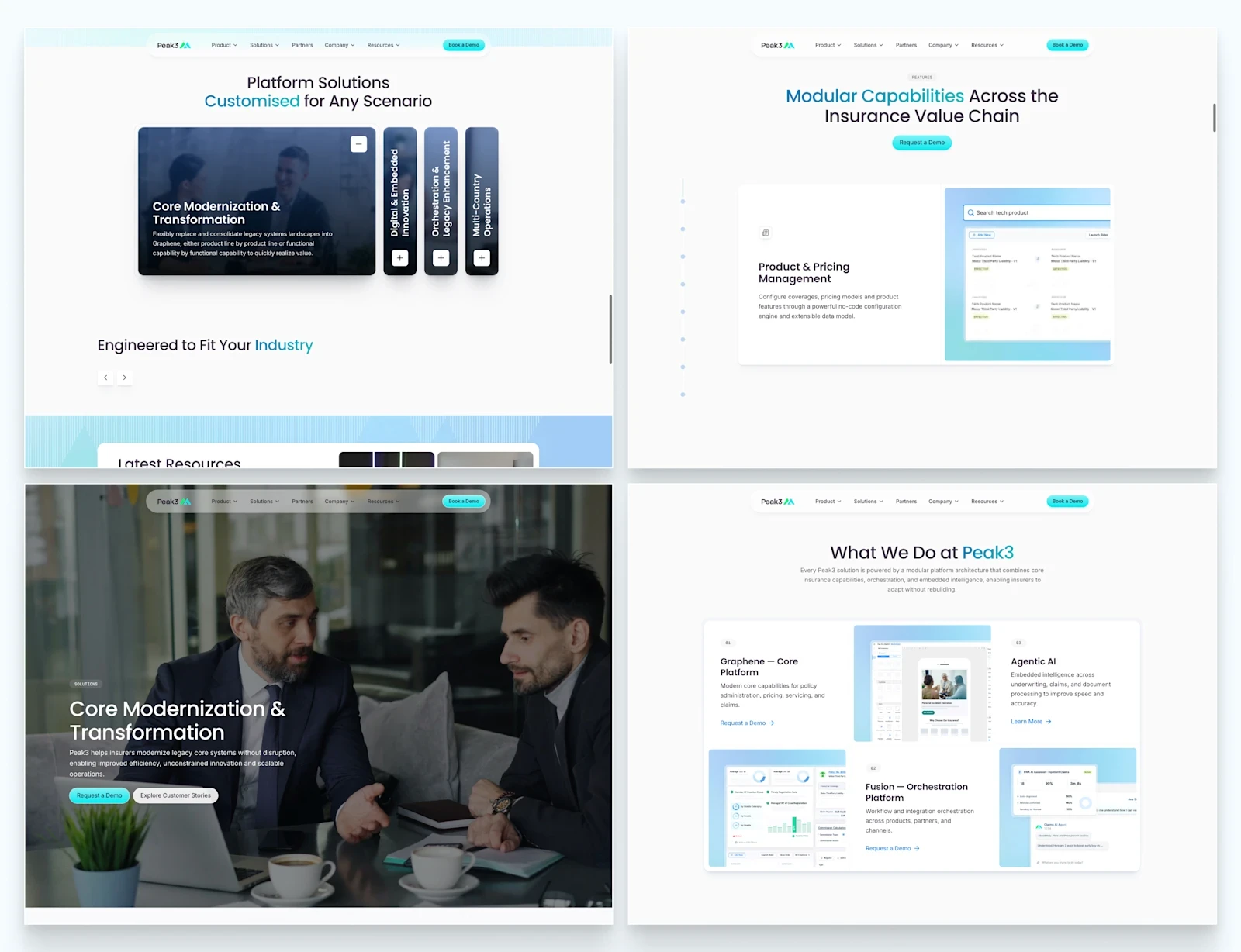
The architecture is part of the design: content types have defined homes, reusable templates and consistent publishing controls.
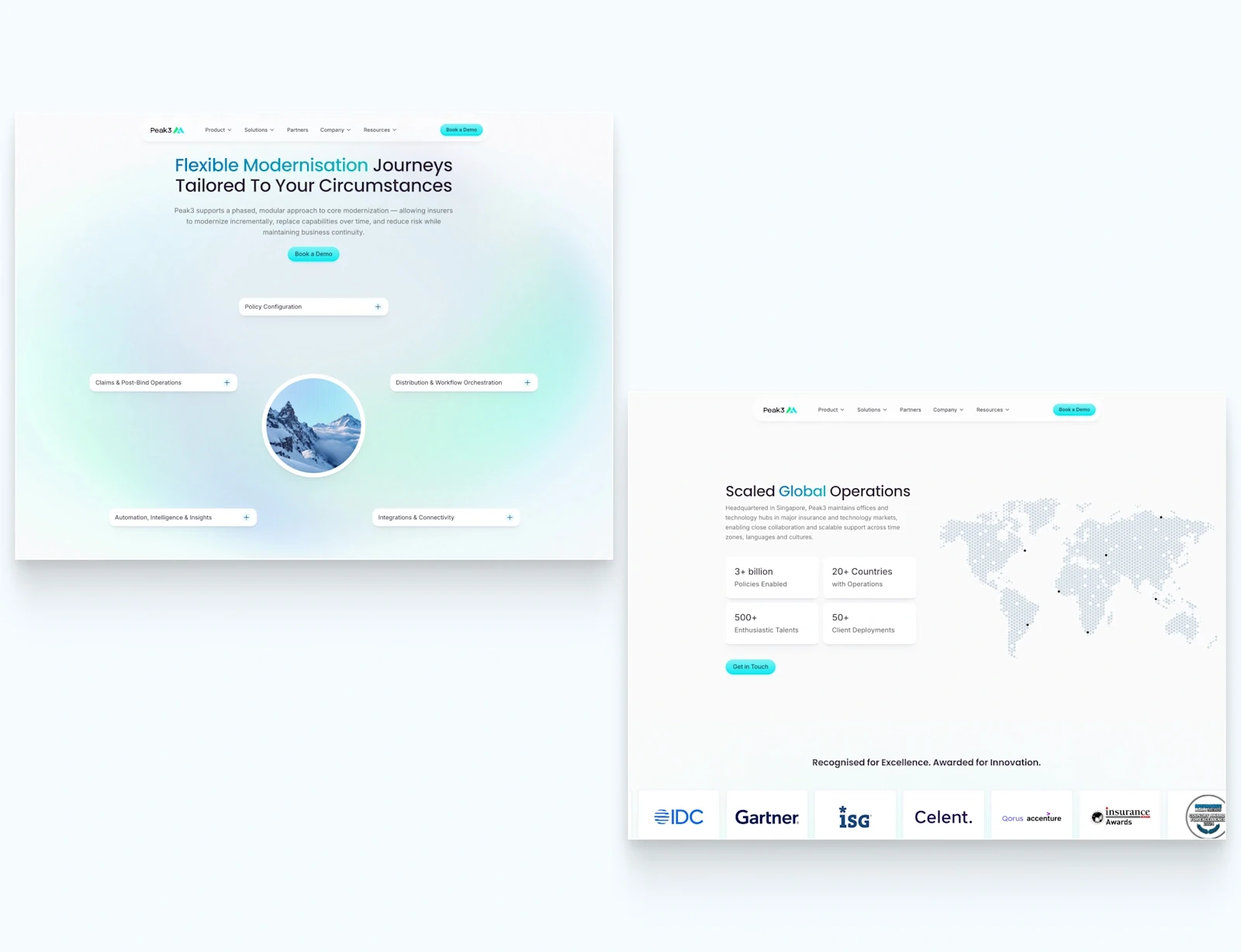
Built for continued use
For Peak3, the website needed to serve both enterprise buyers and the team maintaining it. The page hierarchy supports the former; the CMS and templates support the latter.
That connection gives the team a practical way to keep the website current as its content grows.
The system
A Framer build spanning 17 page templates, 39 URLs and six CMS collections, with product pages, resource publishing and HubSpot integration.
Continue exploring


