3 Acres
A Framer website connecting property discovery with the path to a tour
Client
3 Acres
Sector
Real estate
Stage
Live asset
Scope
Website design + build, AEO
The stakes
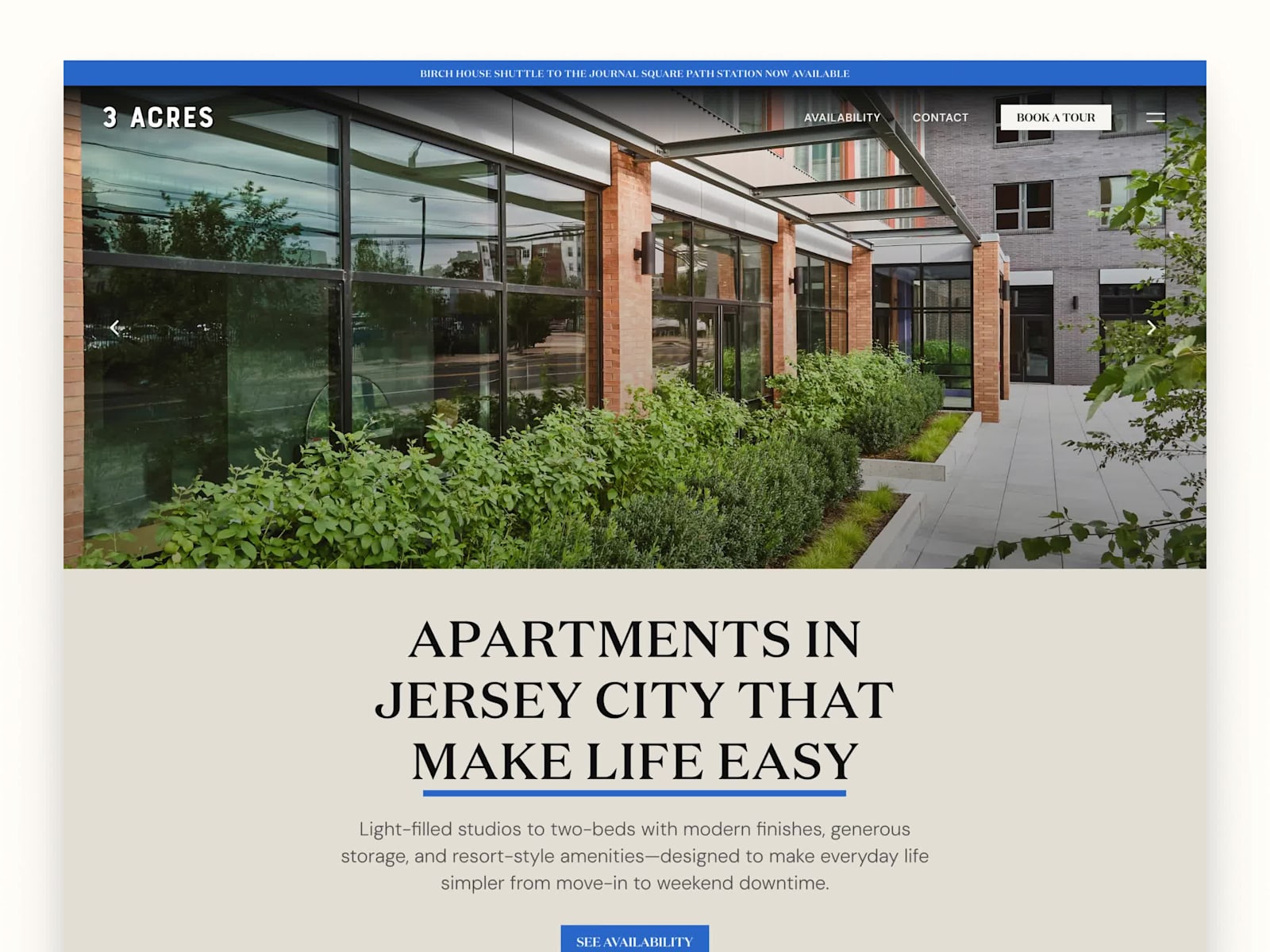
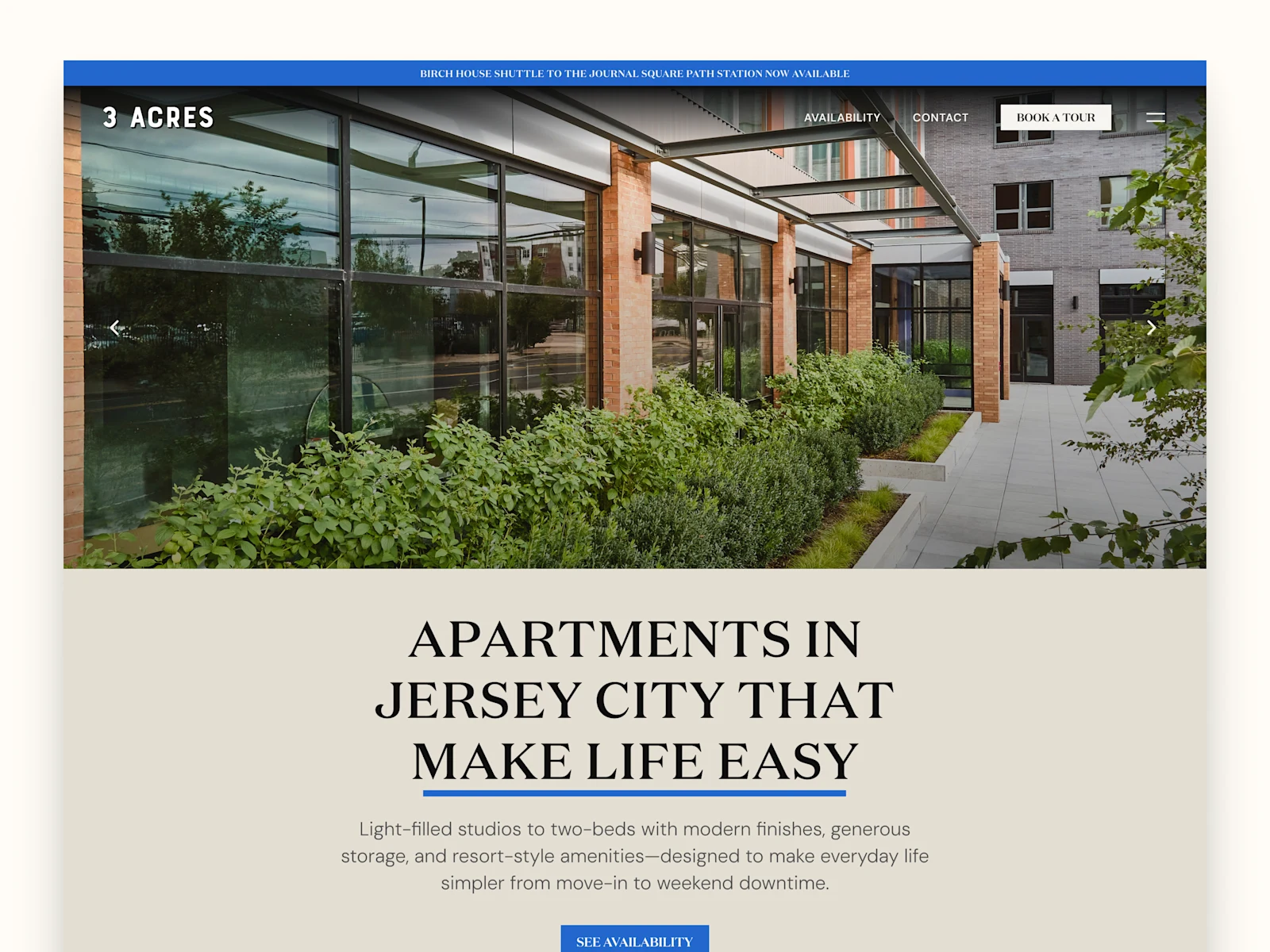
3 Acres needed a website that presented the property clearly and gave prospective residents an easy route from exploring the community to booking a tour.
The read
The existing WordPress site needed a stronger property presentation, more useful content structure and publishing controls for the property team.
The move
Build the resident journey in Framer, connecting residences, amenities and neighborhood content with tour-booking paths and structured data.
The property and the brief
3 Acres is a 629-unit luxury rental community in Jersey City. We redesigned its website to give prospective residents a fuller view of the property, make the route to a tour clear and give the property team control over day-to-day content updates.
Connect discovery with the next step
The existing WordPress site used a template that gave the property limited room to present its residences, amenities and neighborhood. We needed a page structure that could show those details and connect them to availability and tour booking.
Search visibility was also part of the brief. We planned clear property information, page metadata and structured data to help search engines and AI systems interpret the site’s content.
Design around the resident journey
We organized the site around the questions a prospective resident needs to answer: what the homes are like, what the community offers and how to arrange a visit.
We moved the build to Framer so the design and content structure could be managed together, with direct editing controls for the property team.
The platform also supported the custom structured data required by the project, alongside reusable layouts for the property’s pages.
The website and content
We led the website strategy, designed the pages in Figma and built the site in Framer.
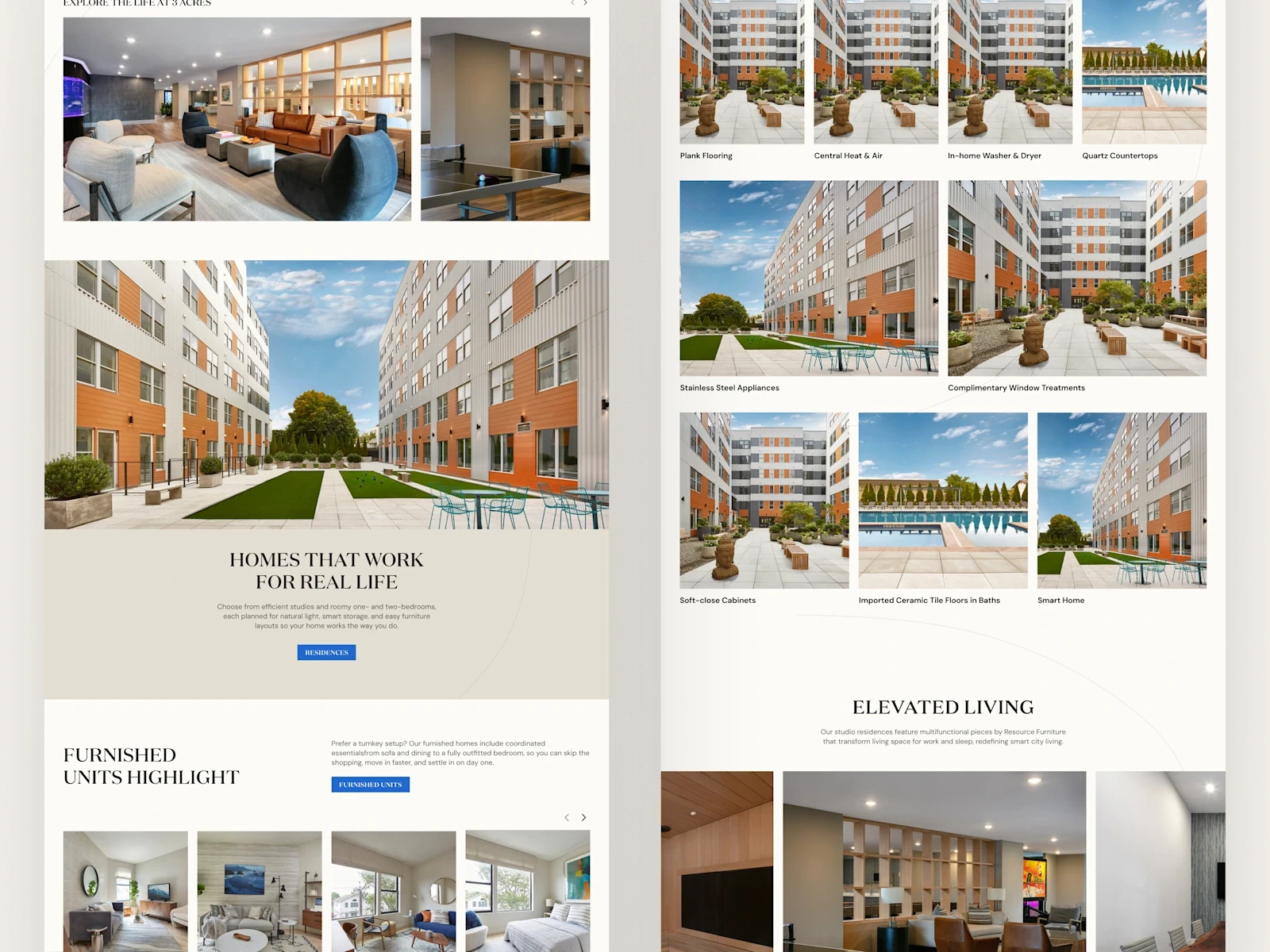
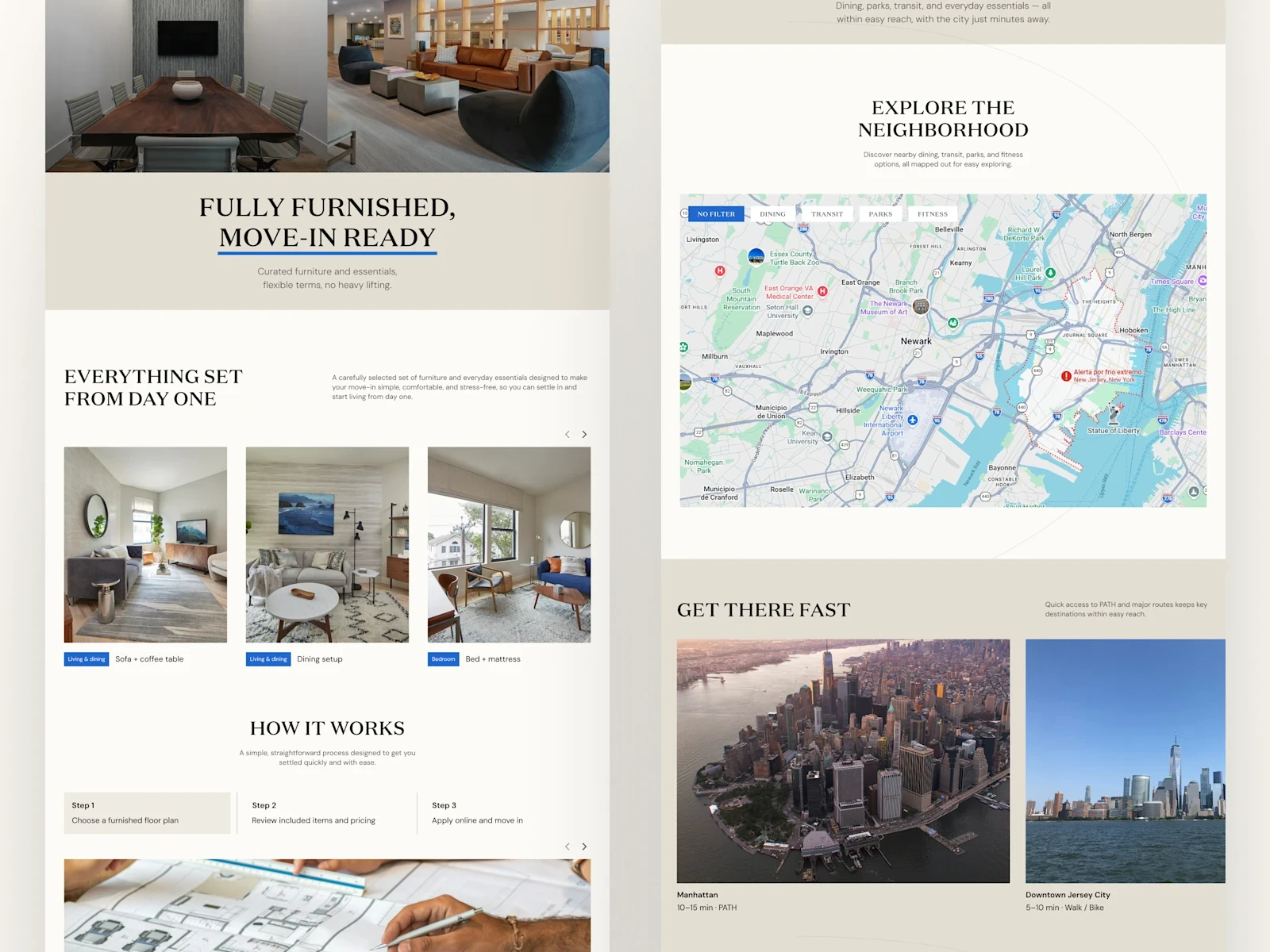
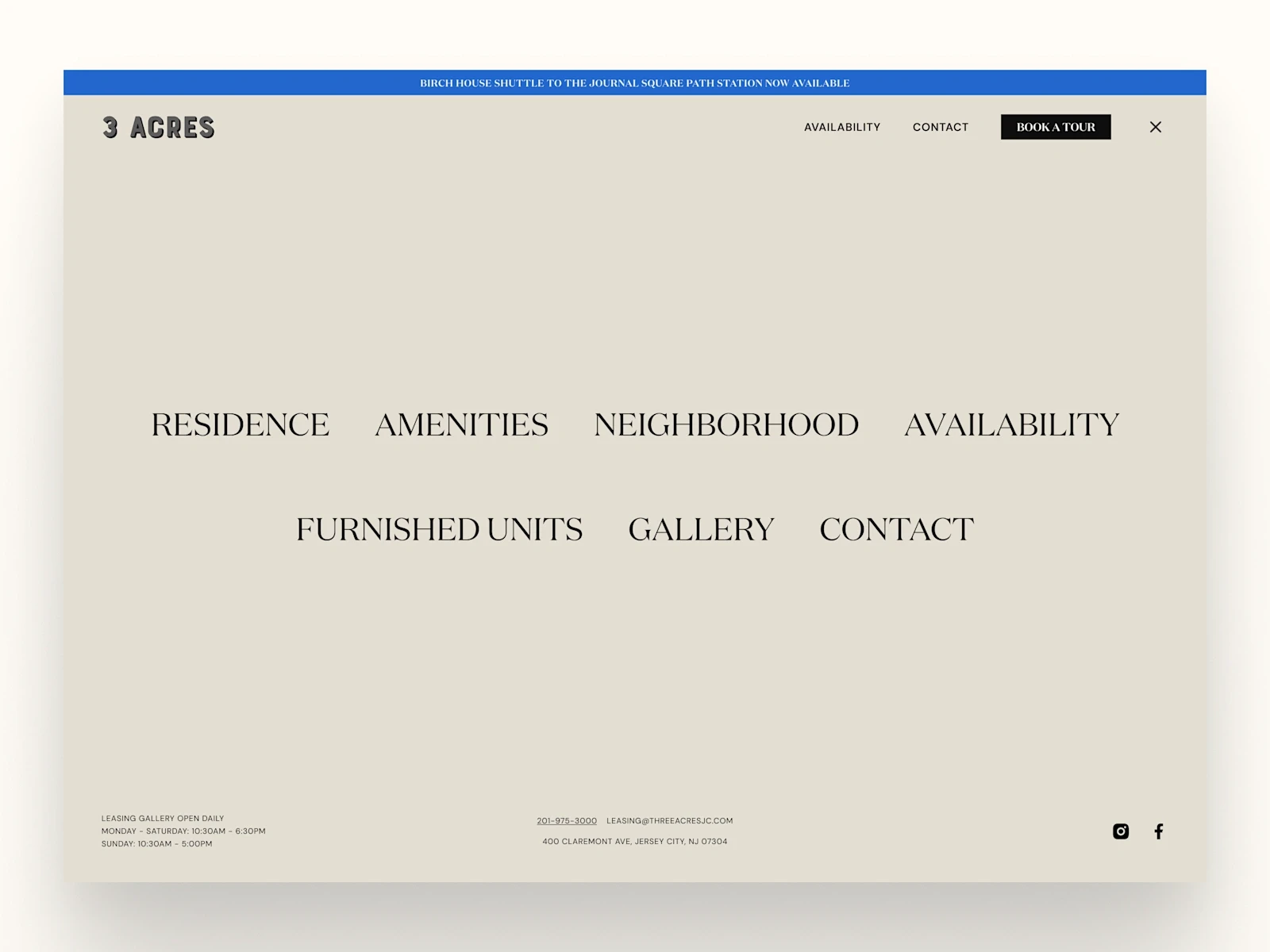
The build covers residences, furnished apartments, amenities, the neighborhood, galleries, a virtual tour, events, availability and contact, with supporting legal pages and a 404. The page hierarchy keeps tour booking accessible throughout the resident journey.
We wrote the copy from scratch, including page titles, descriptions, headings and body content. The writing brings property details into a consistent structure for visitors and search systems.
The structured data includes ApartmentComplex, Organization, WebSite and FAQPage markup, connecting the property, company and page information in a machine-readable format.
The delivered work
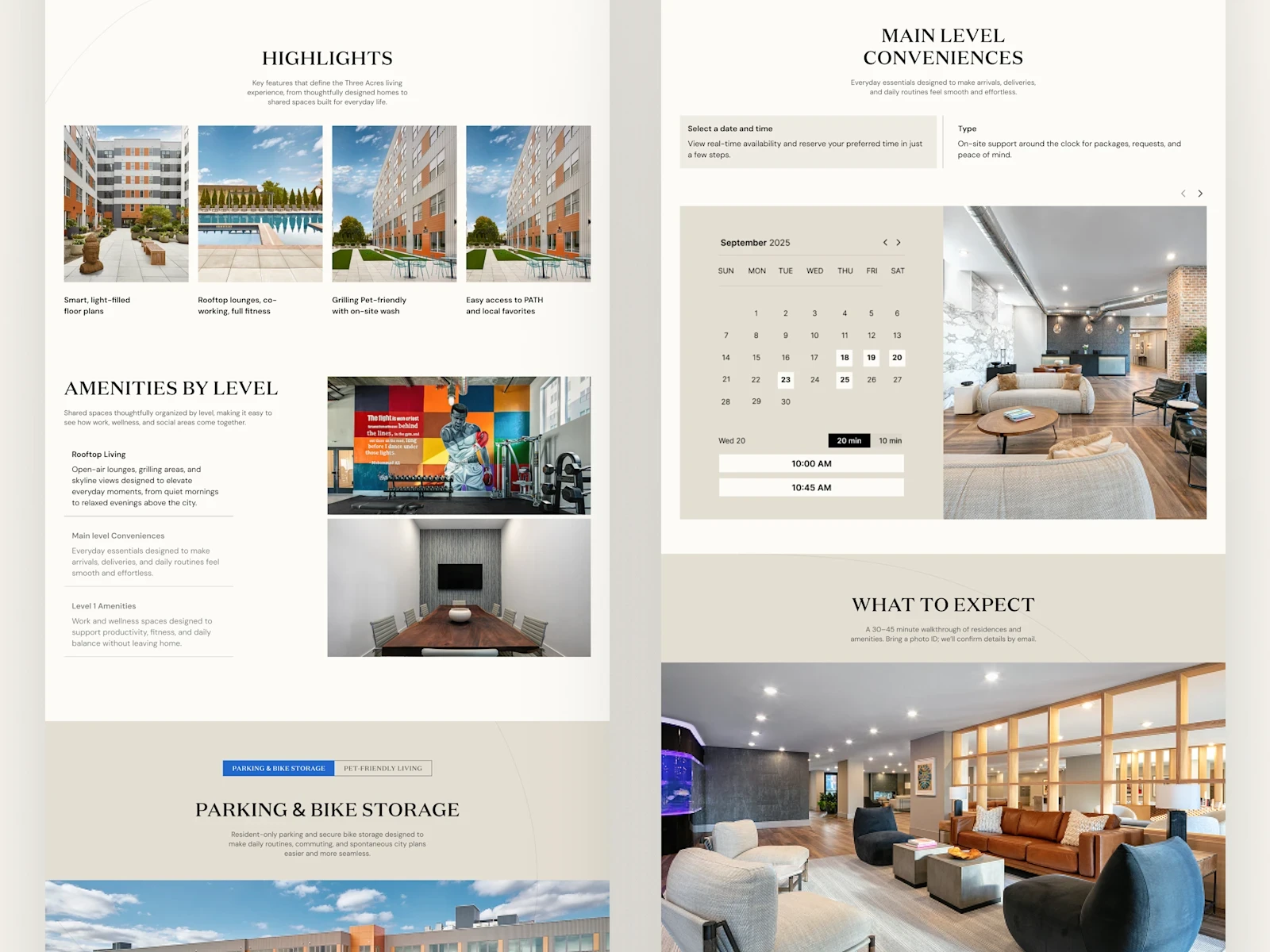
The completed site gives 3 Acres a consistent presentation across its property and neighborhood pages, with routes to availability and tour booking. The property team can update the content through Framer.
Property details, FAQs and metadata follow a consistent structure across the pages, supporting on-page browsing and machine interpretation.
A practical property website
The design connects the property’s visual presentation with useful information and a clear next step. The publishing controls let the team maintain that experience as availability and community content change.
The system
Original copy, property and neighborhood pages, content controls and JSON-LD markup for a 629-unit rental community in Jersey City.
Continue exploring


