bem
Reusable content templates, an imagery system and a homepage direction built on bem’s existing identity
Client
bem
Sector
AI infrastructure
Stage
Scaling
Scope
Brand system, templates, website design
How much time
Ongoing


The stakes
bem needed reusable Figma templates for blog, LinkedIn, newsletters and ads, so its team could produce content from the existing brand identity.
The read
Applying the identity to real content raised new questions about color roles, code snippets, metric cards and imagery. Those decisions needed to be documented for repeat use.
The move
We extended the existing identity with production rules and a repeatable imagery treatment, then developed a homepage direction around the product’s core argument.
View the interactive brand presentation →
Starting with content templates
bem is a production layer for unstructured data. The initial brief was to build reusable Figma templates for blog, LinkedIn, newsletters and ads, so the team could add copy and produce content using the existing identity.
Branding&Co had created identity v1.0: a dark-first canvas, Brand Blue and Accent Blue, with coral and pink used sparingly. Deanna Dong had established the messaging around deterministic outcomes in business-critical AI workflows. We built on those foundations and developed the tools to apply them consistently.
The templates exposed the gaps
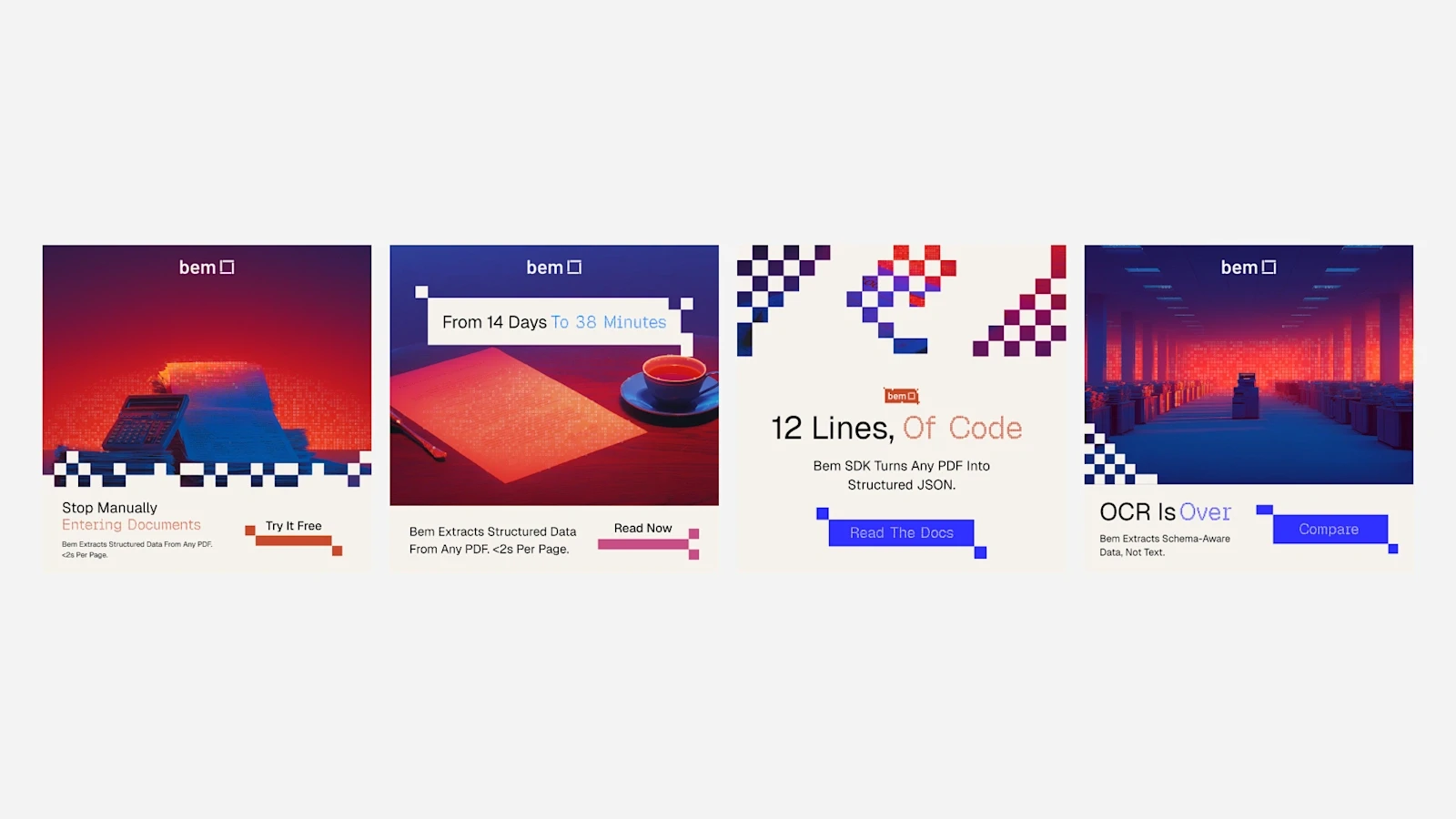
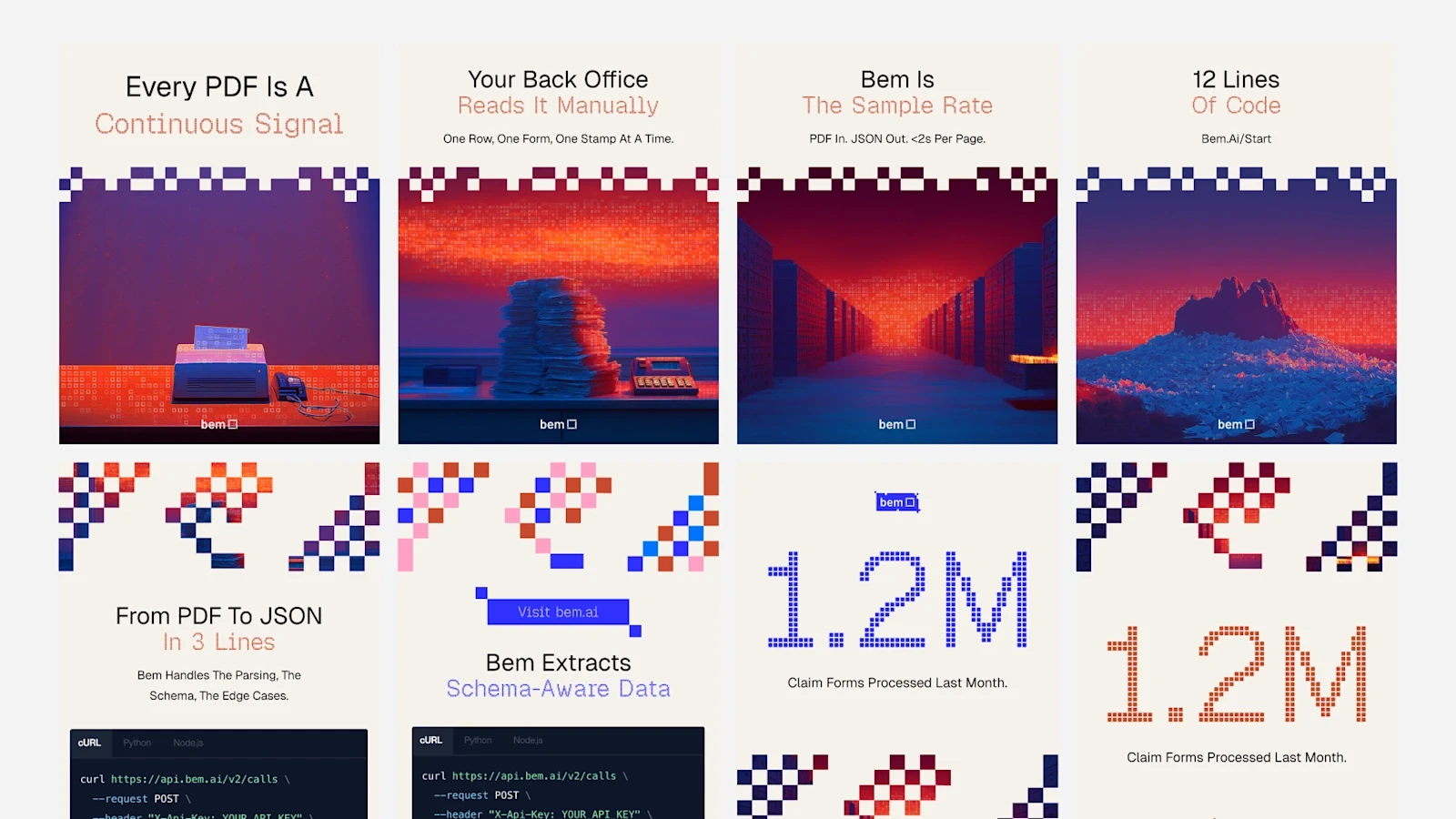
The template work covered four LinkedIn card variants, social preview cards, carousels and ads for three platforms. It exposed practical decisions to resolve: accent colors for content categories, code styling and metric-card layouts. A light-theme alternate introduced the cream canvas used across the brand’s lighter applications.
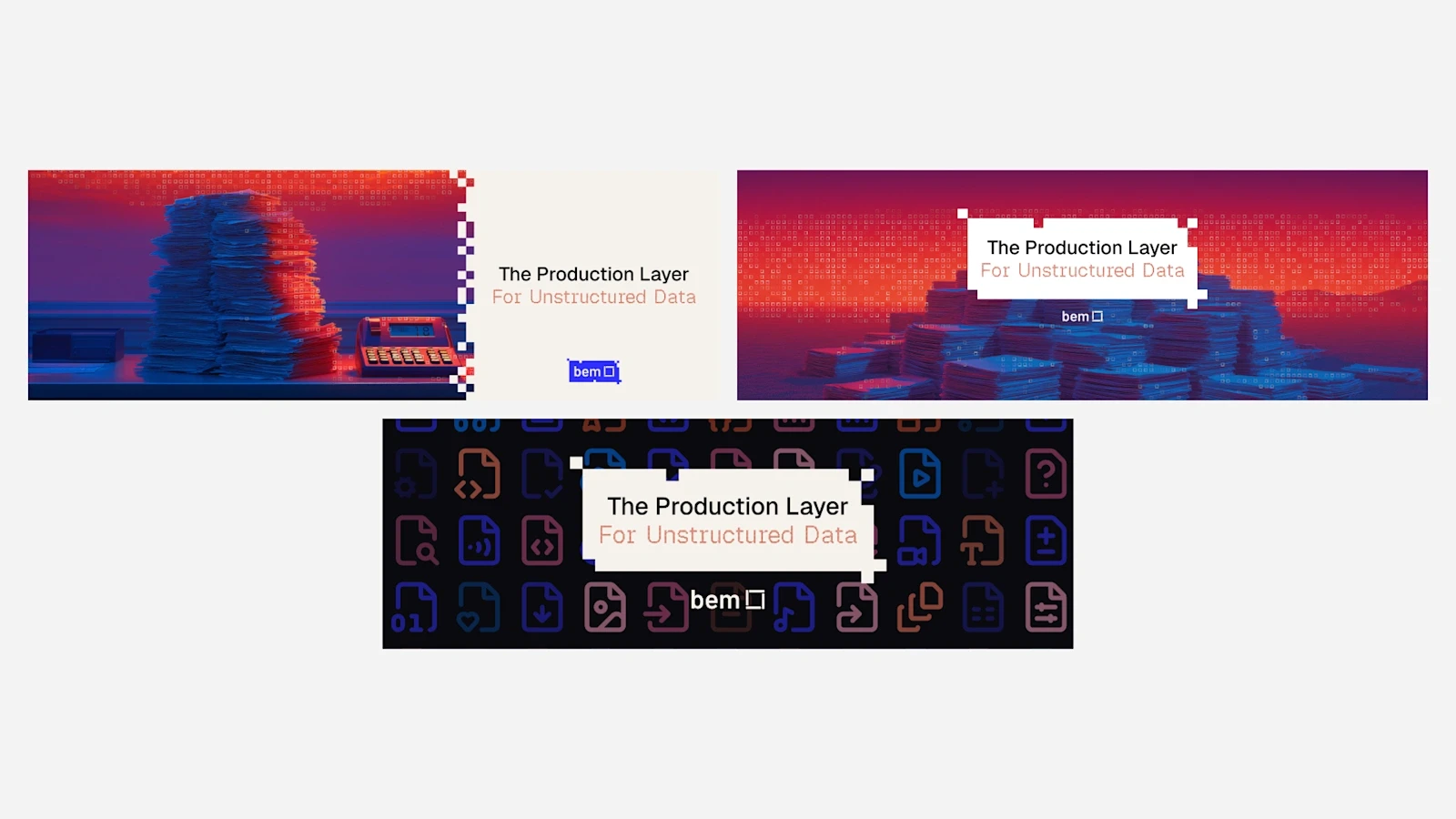
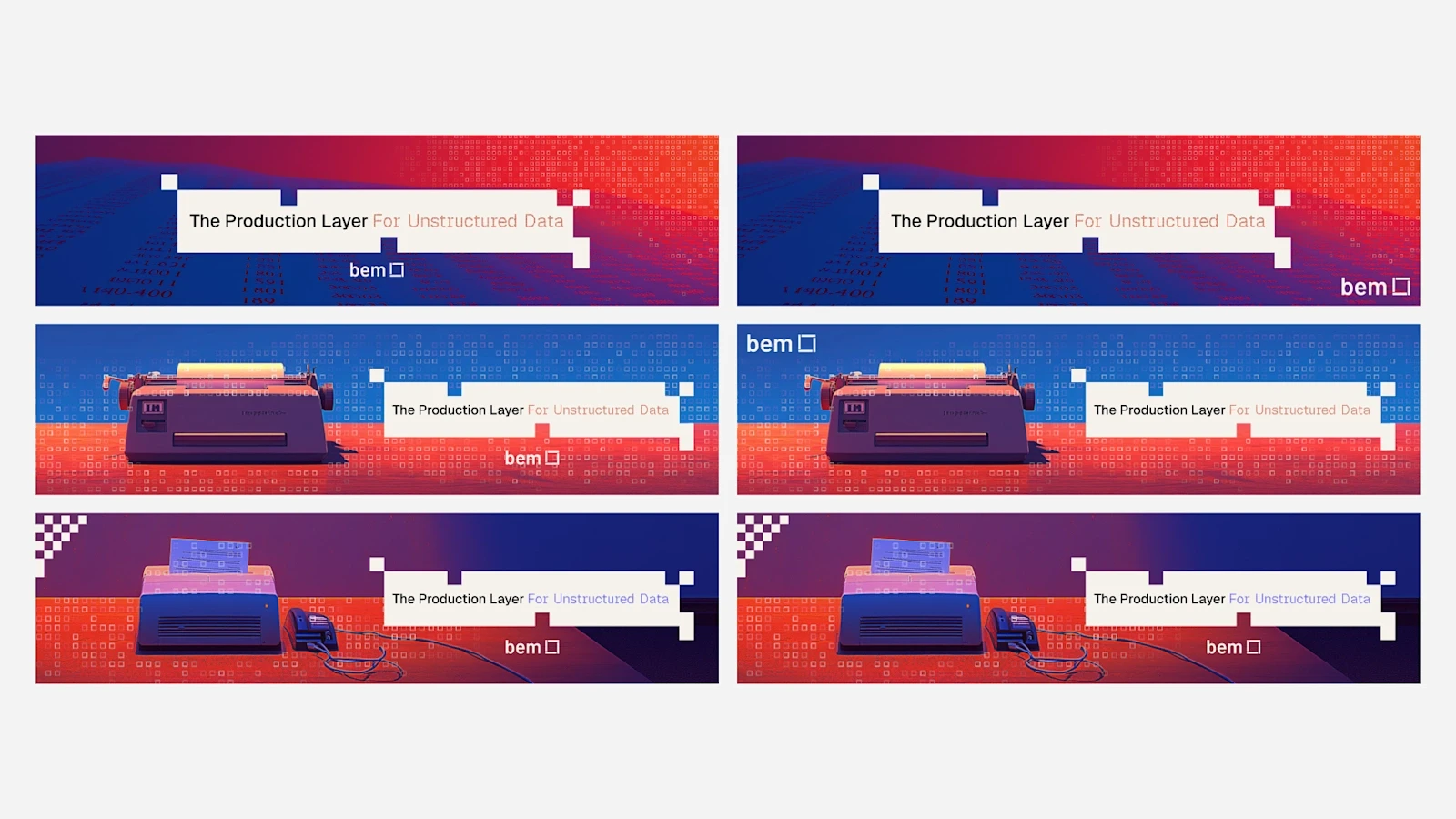
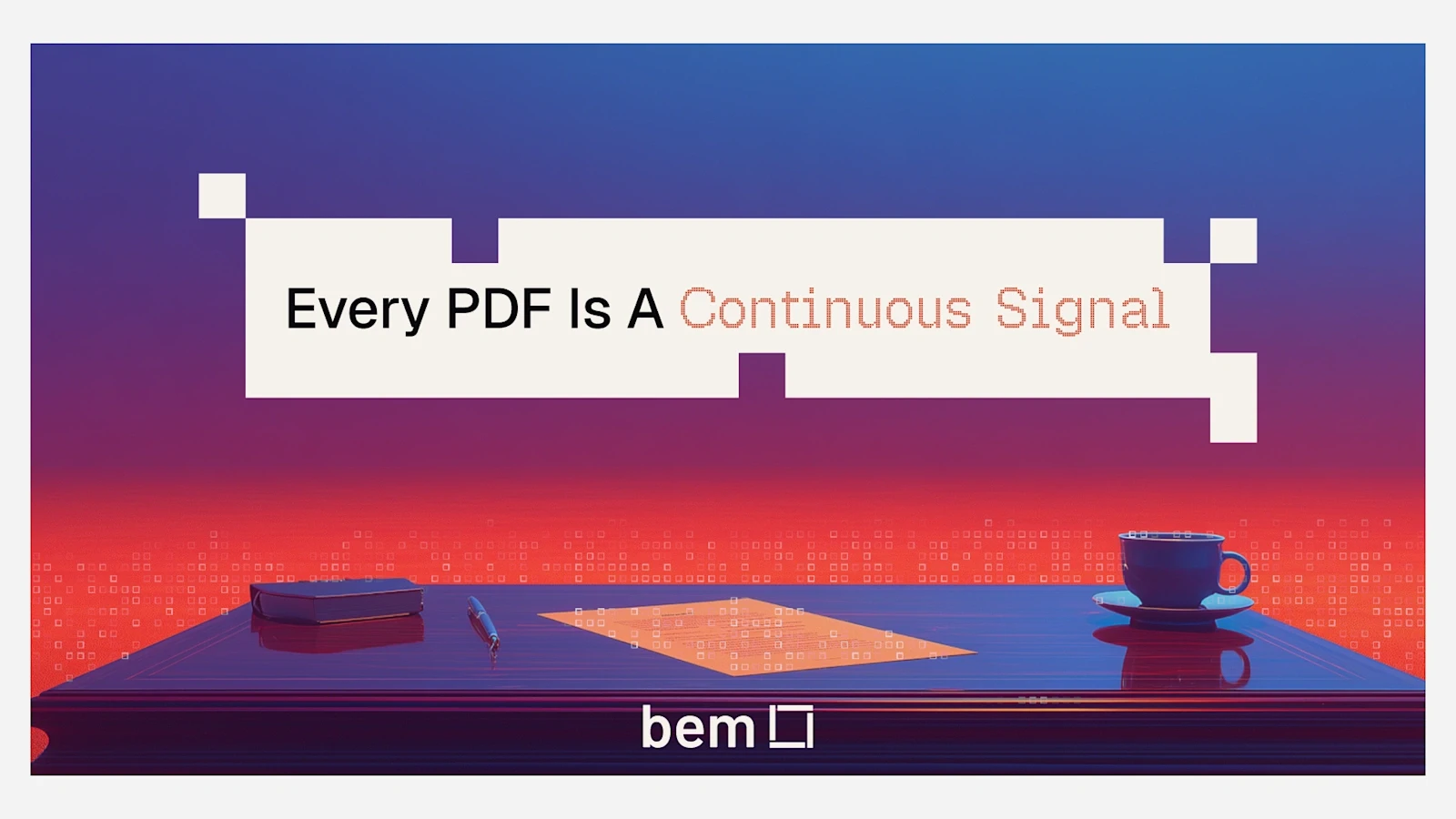
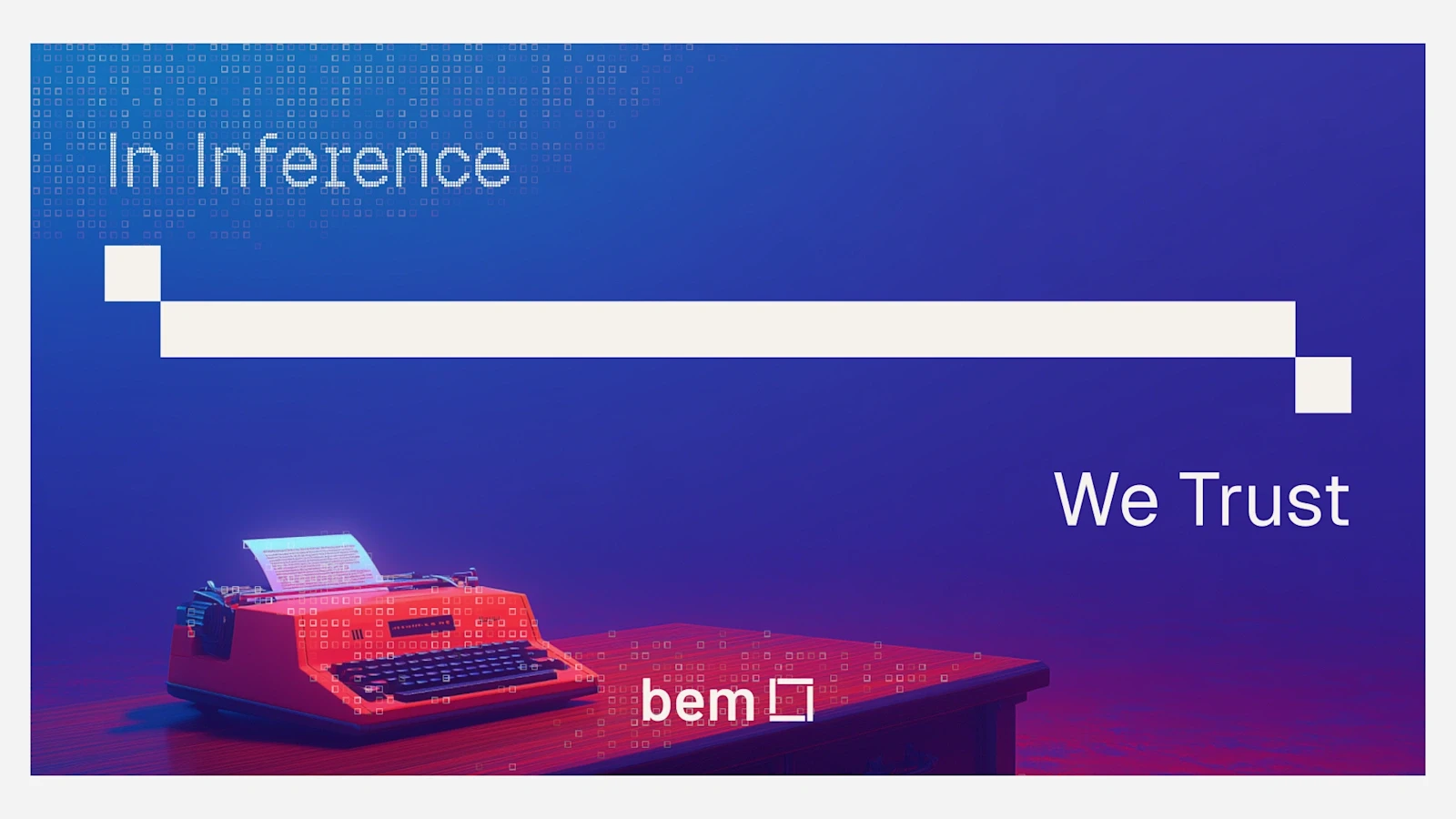
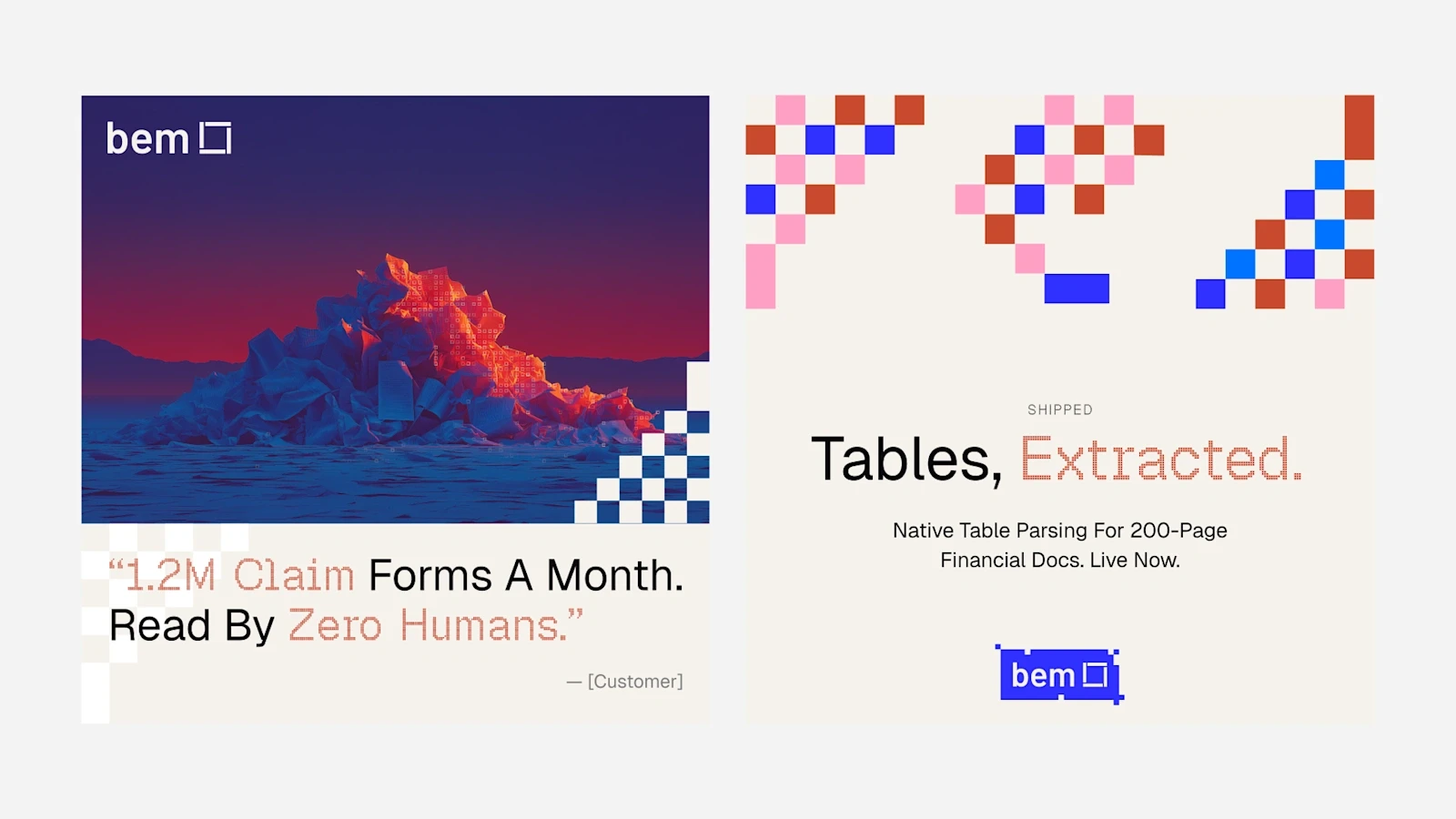
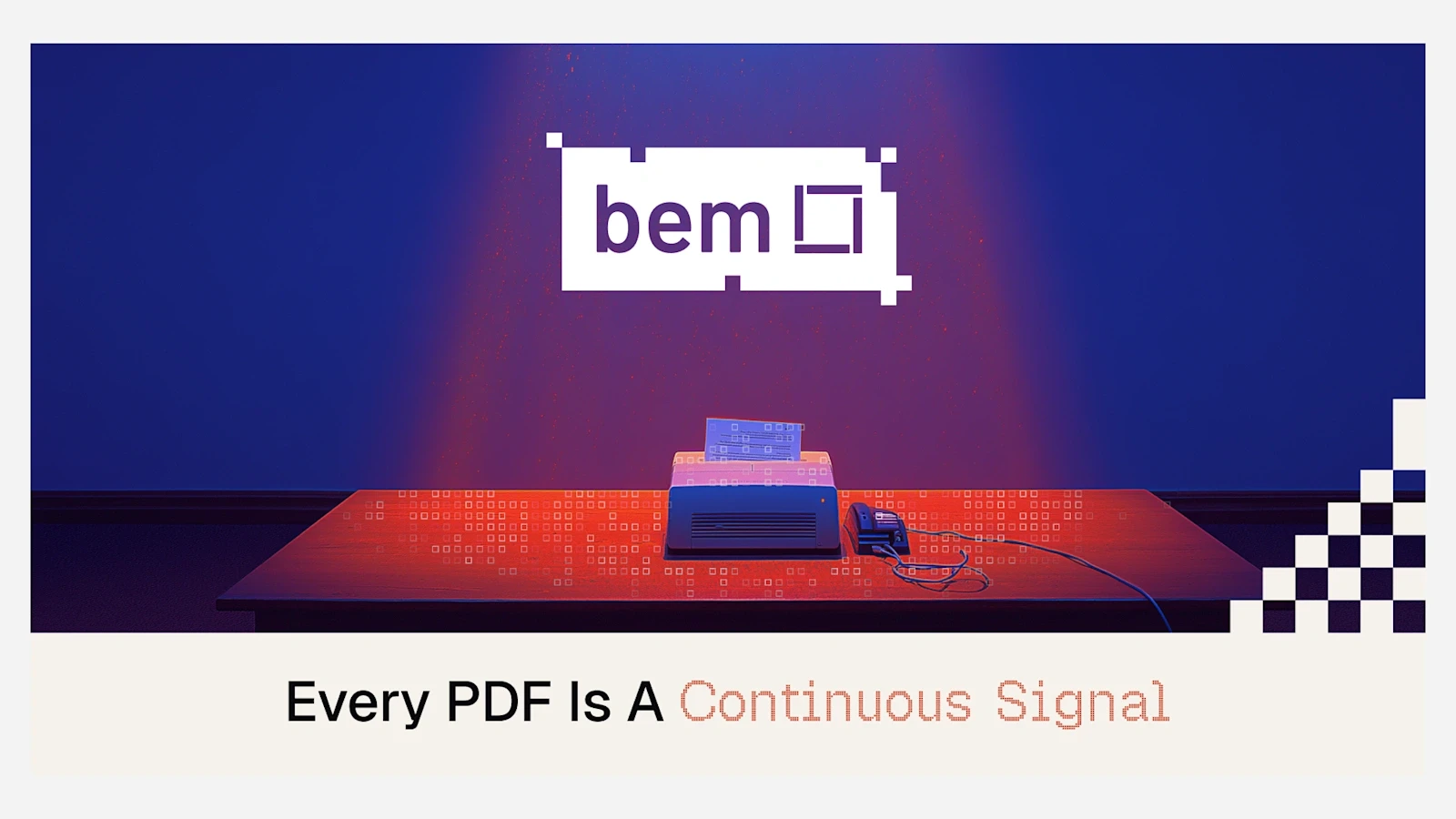
We developed Document Mode as a repeatable imagery system: vintage paperwork, filing archives and forms, generated in Midjourney through a shared prompt library. The source images stay neutral; red-and-blue duotone and pixel treatments are applied in Figma. The visual logic comes from bem’s product: turning unstructured inputs into discrete, structured units.
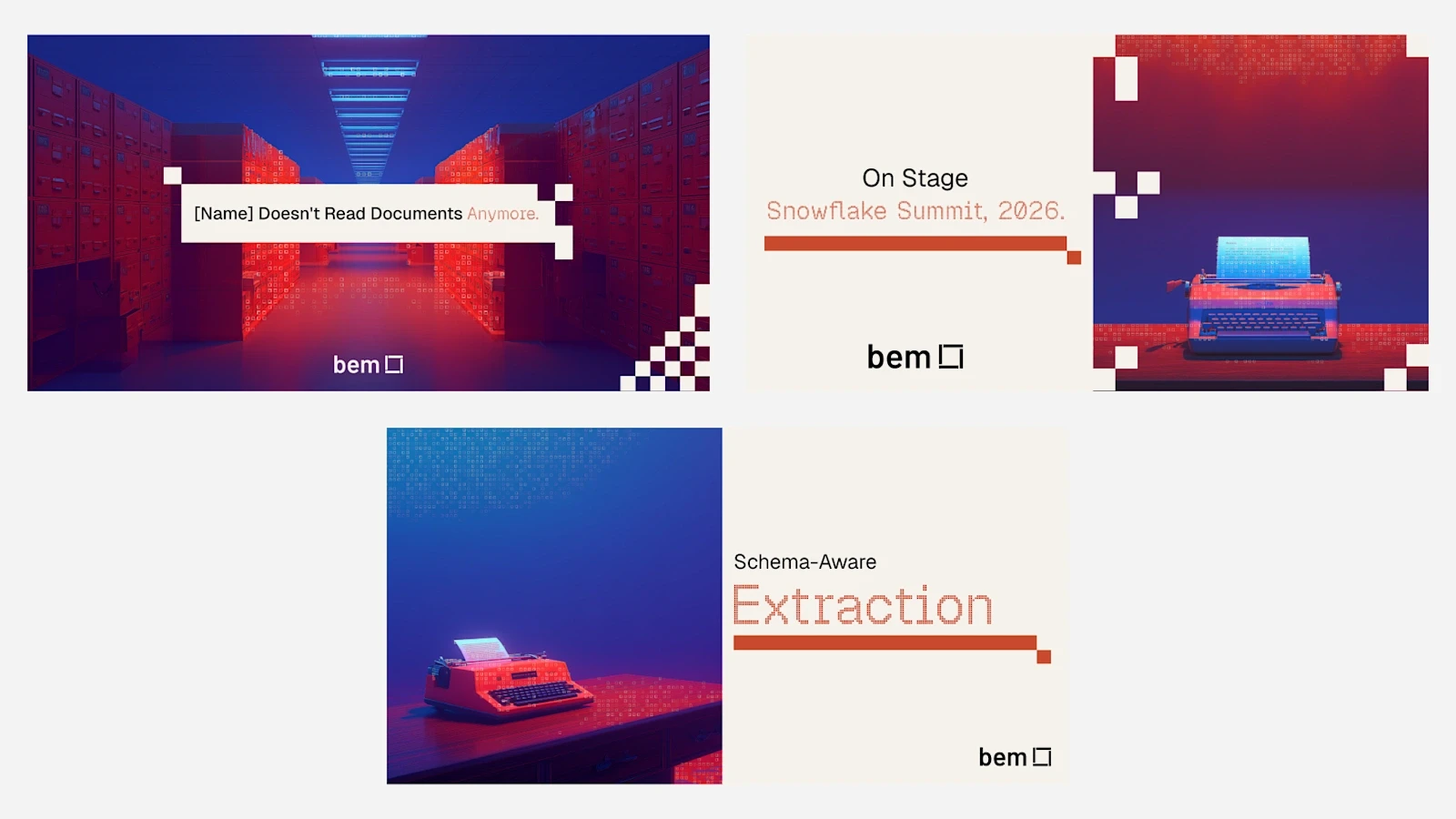
The same kit covers events, launches, and customer proof, with placeholder fields the team fills without touching layout:
Making the rules reusable
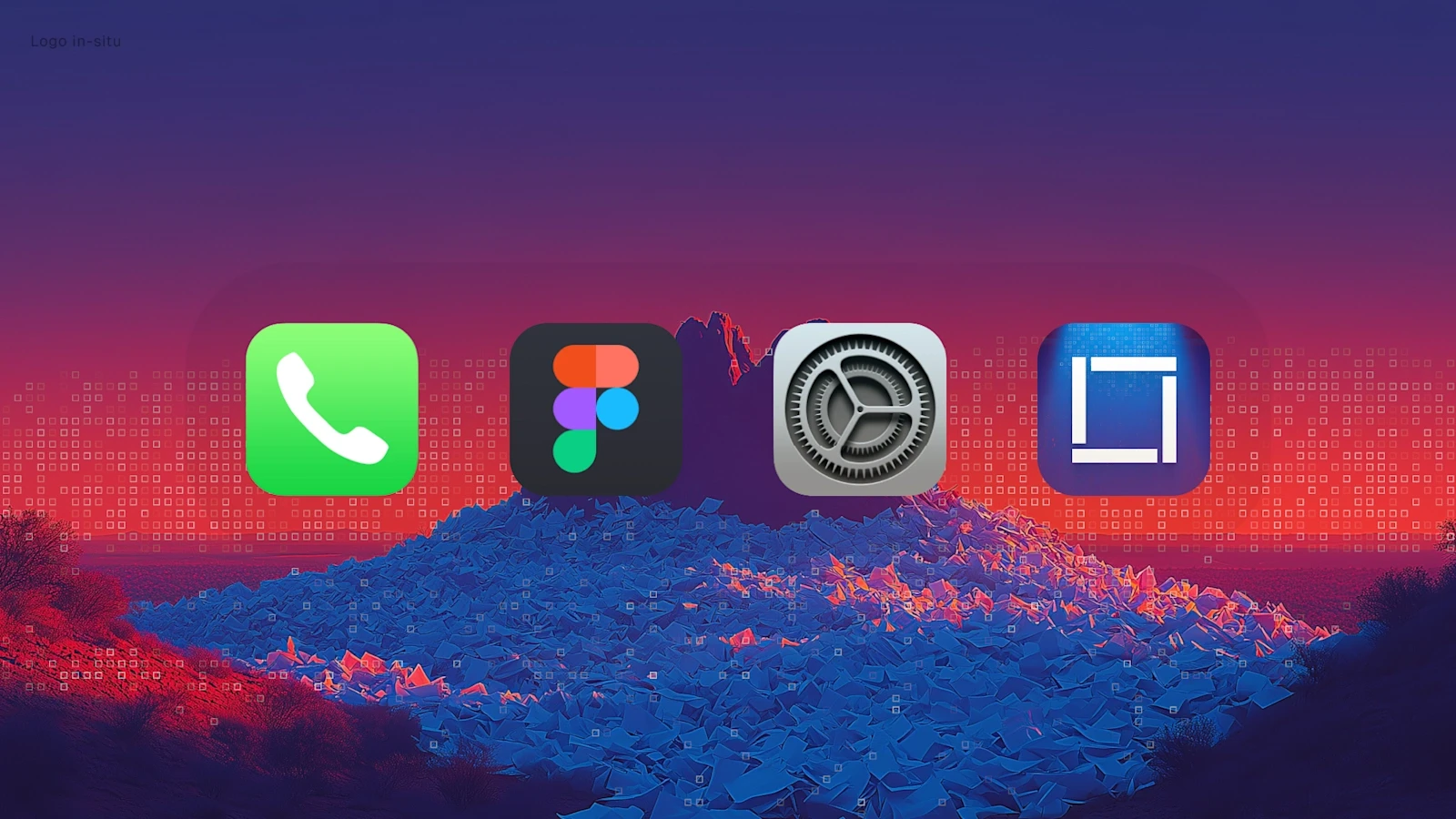
We documented the system in roughly 50 slides of brand guidelines, covering layout, color roles, imagery and type. Geist handles prose, Geist Mono carries technical detail and a pixel display face is used for headlines. Examples and usage rules show how those choices work together, including the lowercase bem name.
The team’s automated marketing workflow created another requirement: templates that preserve typography when content changes. We defined HTML templates as a next step, with editable content inside fixed layouts. That work was a proposed extension of the production system.
Bringing the product argument forward
The work then expanded to the website. We reviewed how the existing pages presented the product, with particular attention to consistency and the explanation of deterministic controls.
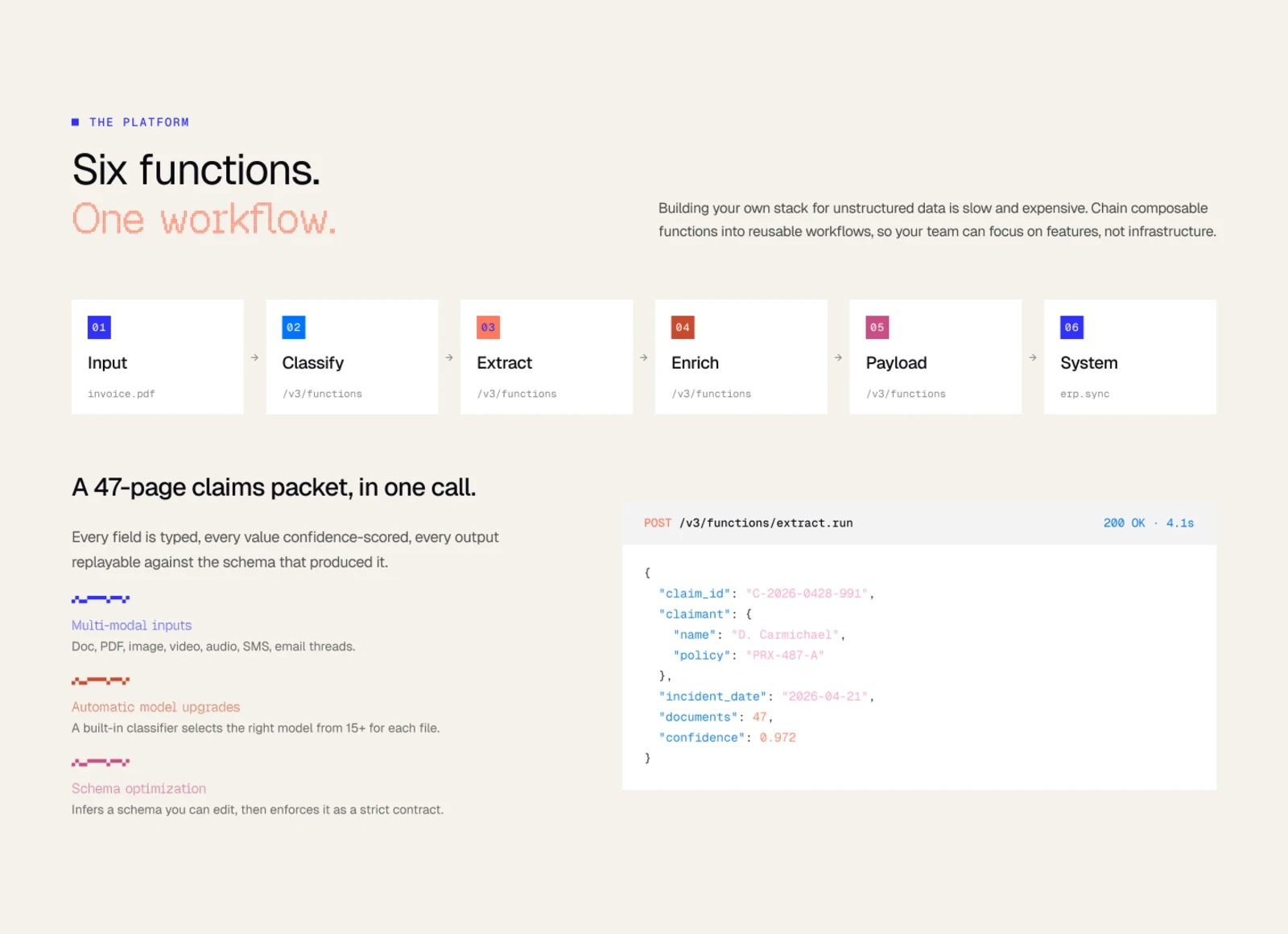
The audit led to a proposed homepage structure that introduced the determinism argument earlier. Typed schemas, confidence scores, audit trails and replayable outputs became easier to locate in the story, with six functions presented as one system, customer proof nearby and separate routes for the two buyer groups.
The homepage direction
The selected direction combines a cream canvas, pixel display type and Document Mode imagery. An ASCII shader turns image highlights into characters drawn from JSON syntax, extending the structured-data idea into the motion treatment.
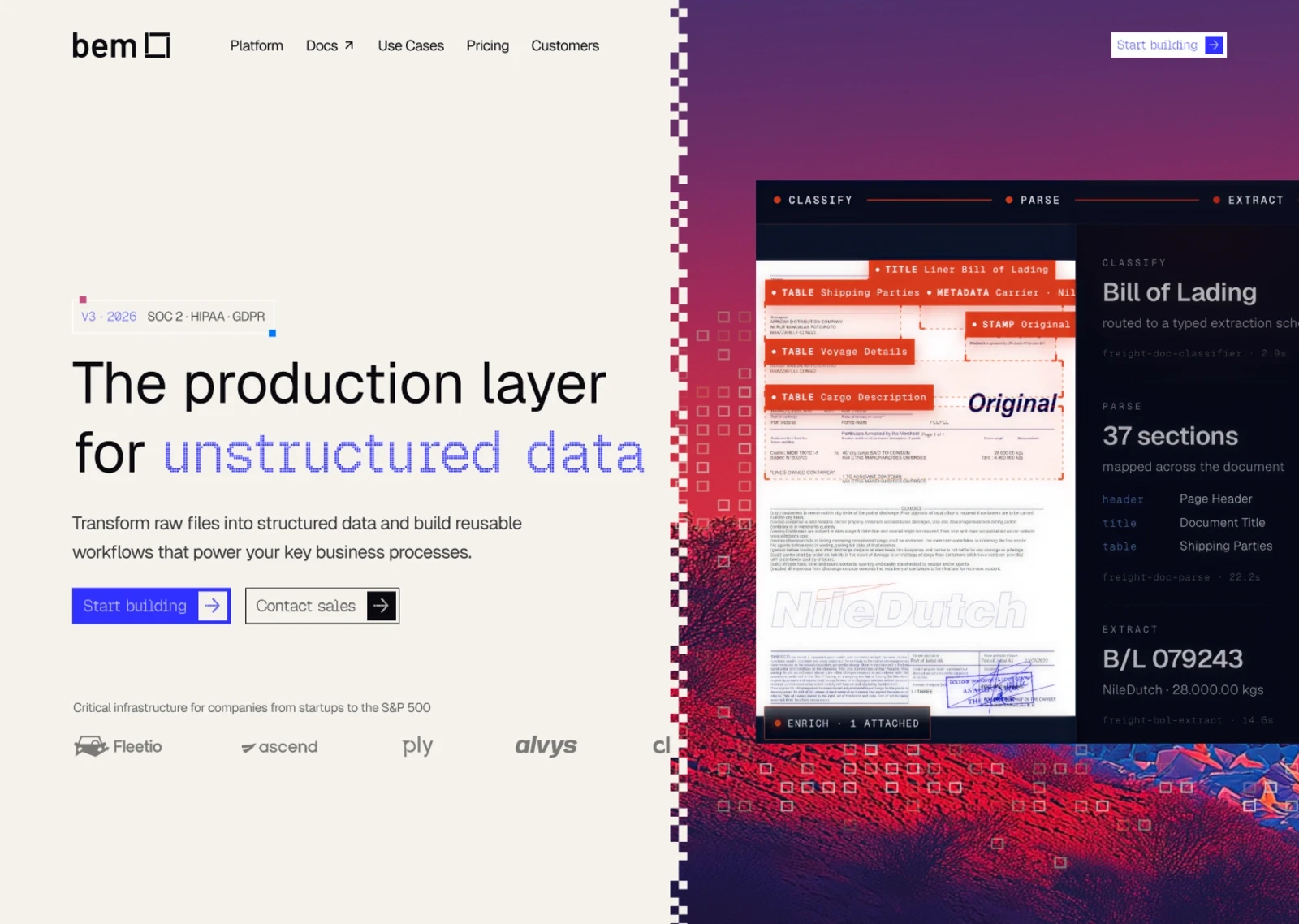
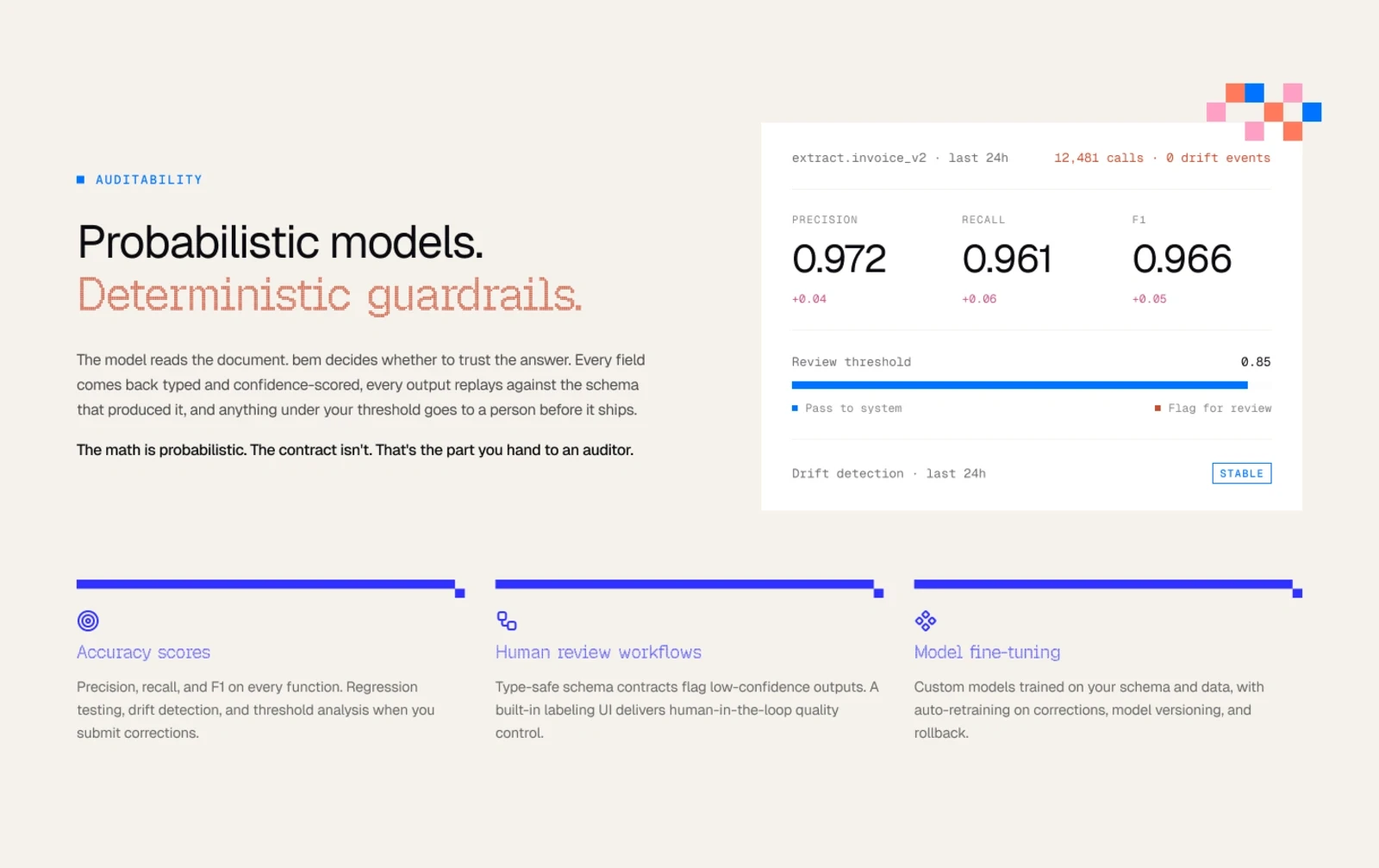
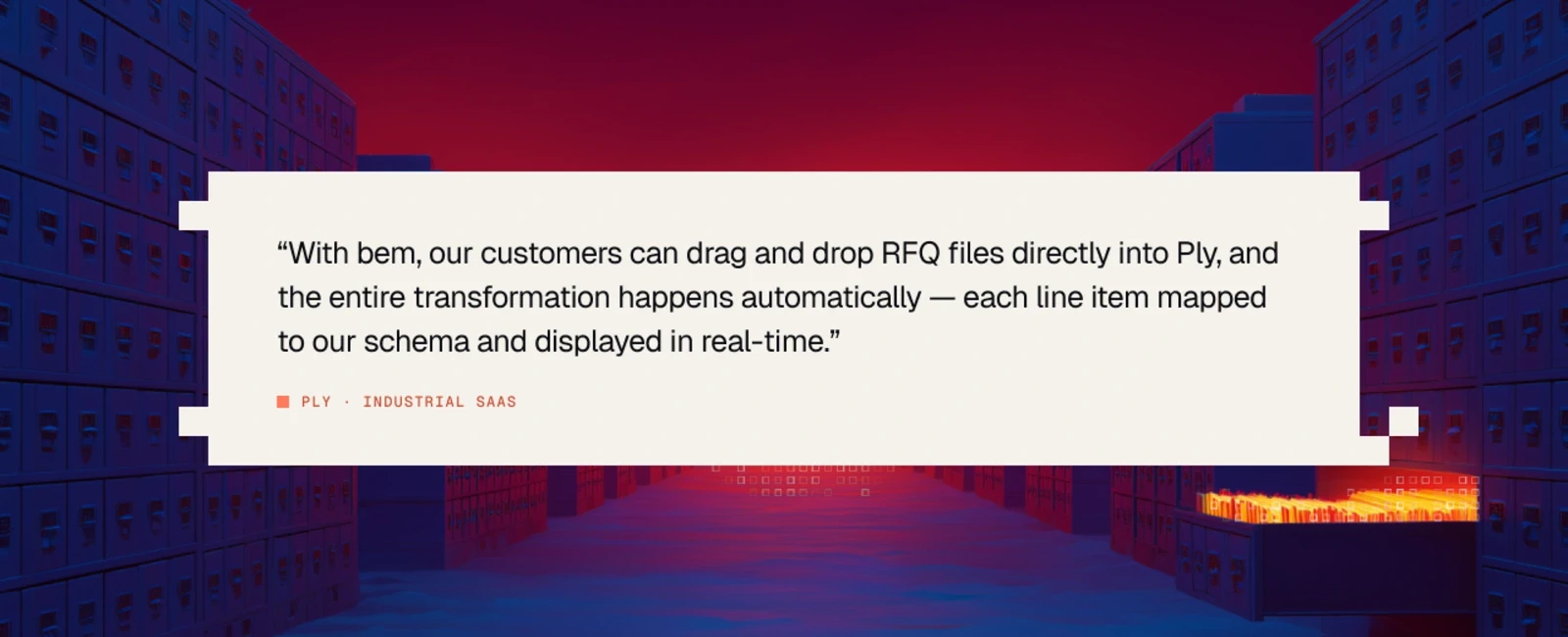
The homepage design includes a determinism section with a metrics card, a six-function pipeline illustrated through a claims packet, blue and coral routes for the two buyer groups, and customer proof over brand imagery.
Where it stands
The system covers reusable social templates, decks, one-pagers, merchandise and the homepage design. The ongoing collaboration builds on bem’s existing identity, with shared rules for producing new material.
A shared basis for production
Starting with real content made the missing rules visible. The resulting templates, imagery treatment and guidelines give the team a consistent basis for producing new material as the brand expands.
The system
Document Mode imagery, brand guidelines, reusable content templates and a homepage design, developed through an ongoing collaboration.
Continue exploring