Timelaps
Client
Timelaps
Sector
Brand intelligence SaaS
Stage
Pre-launch
Scope
Naming, positioning, identity, product UI
Timeline
Nov 2025 – Jan 2026
Year
2025–2026
Arrived with an idea and nothing else. Name, positioning, identity, product UI — one concept, motion, carried all the way through to demo signups.

The stakes
In brand intelligence, clarity is the product. A platform replacing static decks couldn’t launch looking like one — credibility with CMOs was on the line from day one.
The read
The team arrived with a sharp product thesis and no brand to carry it. The category splits between rigorous-but-static research and alive-but-lightweight tools; Timelaps had to read as both rigorous and alive.
The move
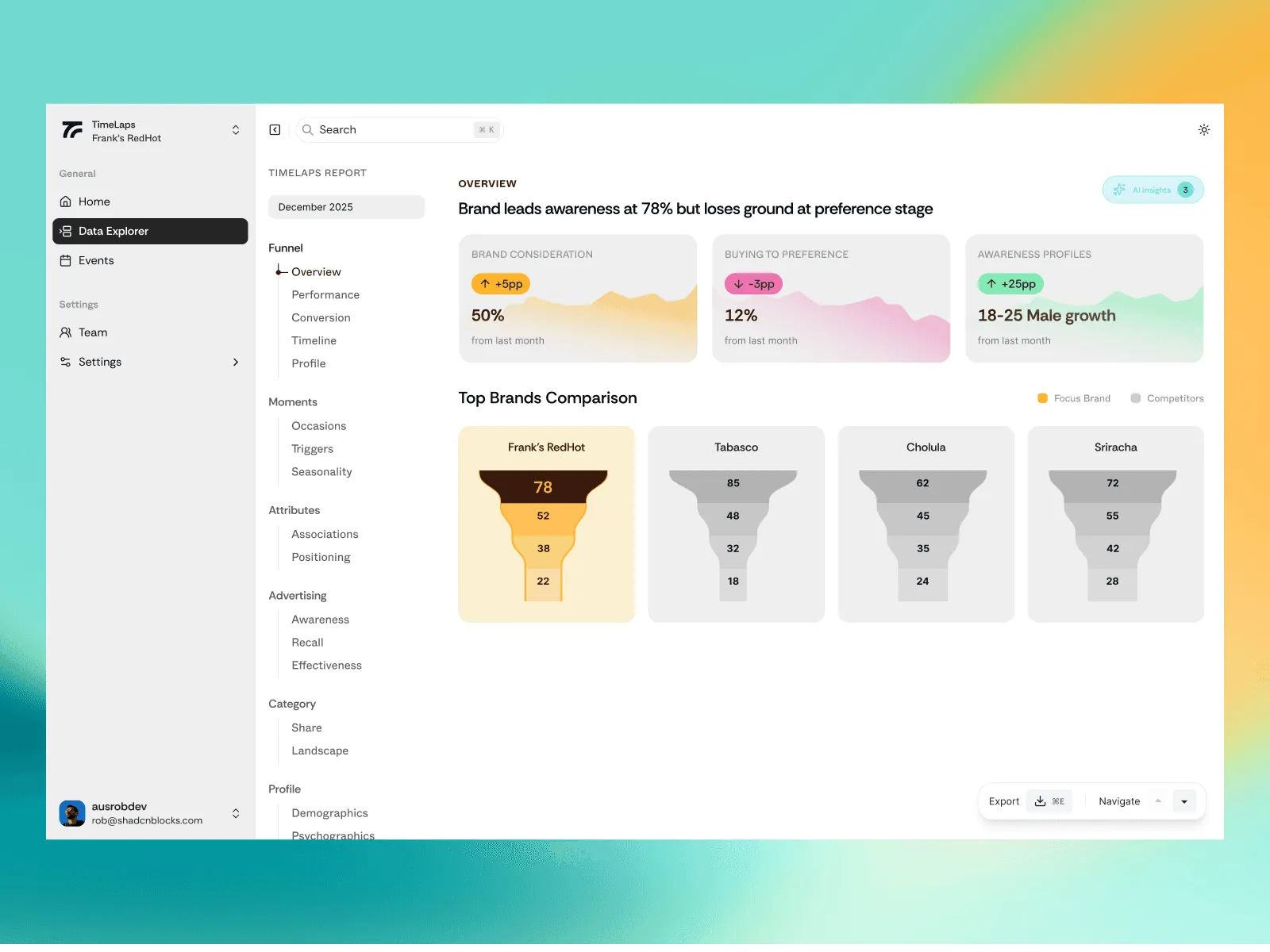
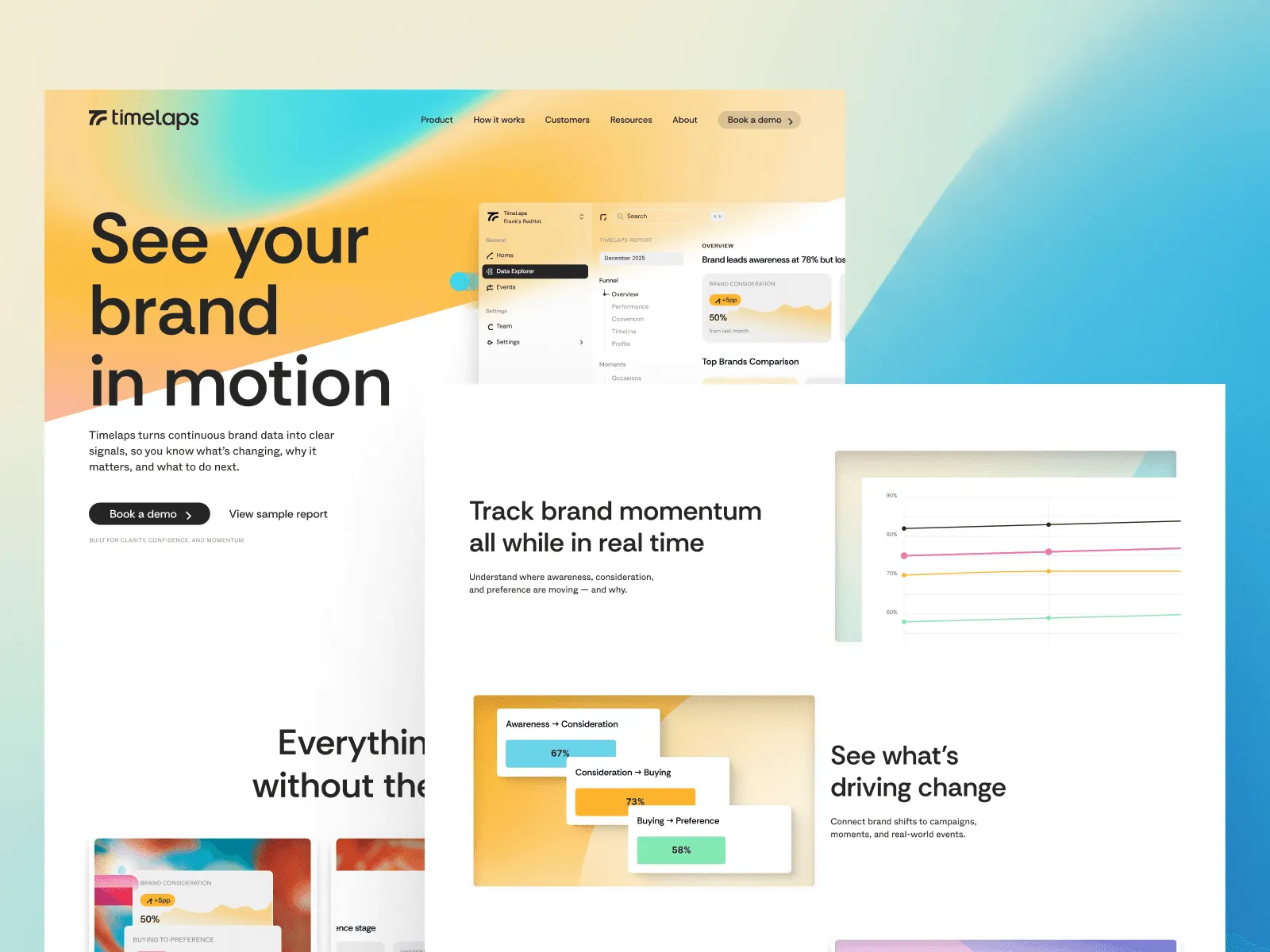
Build everything from one concept: a name, a positioning, and an identity in motion — carried through from wordmark to dashboard UI to the launch page.
Summary
Timelaps is a brand intelligence platform built to replace slow research engagements and static decks with something marketers actually use. We gave it a brand that moves as fluidly as the data it reports: a positioning, an identity, and the first product surfaces, all built to read as rigorous to CMOs and alive next to the PowerPoint era it is replacing.
Industry — SaaS, Marketing Intelligence and Brand Tracking
Services — Brand Strategy, Product Naming, Visual Identity, Dashboard UI, Splash Page Design and Build
Timeline — Q4 2025 to Q1 2026
Tools — Figma, Framer, Midjourney
Inflection point — Post-PMF, pre-category leadership
The Client
Timelaps is a brand intelligence platform built to replace slow, expensive research engagements and static PowerPoint decks with something marketers reach for every week. It was founded by a team that had spent years inside the agency model, so they knew firsthand what brand tracking looked like when it worked, and when it didn't. They came to us with a sharp product thesis and no brand to carry it.
The Problem
In brand intelligence, clarity is the product. If the brand feels murky, the product looks murky, and a CMO deciding where to move research budget reads that murkiness as risk. Timelaps had to land as two things at once: rigorous enough to be credible to that CMO, and alive enough to feel like a genuine break from the deck-and-spreadsheet era it was built to replace.
Two gaps made that hard. The company owned no positioning of its own in a field crowded with research firms repackaged as software. And it had no product surfaces to point to, because the dashboard was still in development and the splash page did not exist yet.
The Decision
We diagnosed the positioning gap as a problem of energy, not substance. Every competitor sounded equally authoritative, which meant authority had stopped being a differentiator. What no one owned was the version of brand intelligence that feels alive, design-led, and genuinely usable by the marketer rather than only the analyst. That space sat empty, so we claimed it. Timelaps became living brand intelligence, a category descriptor that takes a beat longer to understand but stays ownable for years.
We rejected the safer route, an analog positioning along the lines of "the Gong of brand research." It would have been quicker to grasp, but it would have tied Timelaps to a category prospects had already mentally filed, and left the company renting its identity from someone else's.
The System
Brand work only holds if every surface obeys the same logic, so we built Timelaps as one connected system rather than a stack of separate deliverables. Strategy set the direction, the verbal and visual identity carried it, and the first product surfaces proved the brand could live on a real screen, not just inside a guidelines PDF. The handoff kit made all of it repeatable for the team after launch.
Brand strategy and positioning
Product naming and narrative framework
Verbal identity and voice rules
Full visual identity system
Brand guidelines for external use
Dashboard UI foundation
Splash page design and Framer build
Handoff kit with Figma libraries, brand assets, and implementation notes
The Impact
The engagement ran to eleven discrete completed work items, from positioning through to a built splash page. That number is the clearest measure of how far the scope reached once the brand system started proving itself in practice. It also did not end at handoff: Timelaps carried the relationship forward into ongoing collaboration after launch.
The Takeaway
When every competitor sounds equally authoritative, authority stops being a differentiator. Timelaps won room to grow by owning energy instead. The gap worth claiming is usually the one the whole category left empty.
Credits — Strategy, Design, Build: Daniel G. Bright, BrightStudios®
The system
Naming, positioning, visual identity, dashboard UI, and a splash page — one moving system that took the product from idea to demo signups.
The audit will show you your gap. Book it.
Fixed $2,000 · 5 days · credited toward any project