SUPAHUMANS
Client
SUPAHUMANS
Sector
AI talent platform
Stage
Repositioning
Scope
Brand identity + strategy
Timeline
Mar – Apr 2026
Year
2026
Brand identity system for a Barcelona AI talent platform repositioning from staffing into category-defining software.

The stakes
Eleven AI talent platforms were already using the same stock-image look, and SUPAHUMANS was about to make twelve. When every platform looks the same, prospects stop seeing any of them.
The read
The product existed; the positioning didn’t. Arriving mid-rebrand from a name that read like strip-mall staffing, the company didn’t need a nicer version of the category — it needed out of it.
The move
Position against the category’s official portrait: strategy and identity built to make SUPAHUMANS unmistakable next to eleven look-alikes.
Summary
SUPAHUMANS is an AI talent platform that arrived mid-rebrand from a name that read like a strip-mall staffing agency. We built the strategy and identity to take it out of the category entirely.
Industry — SaaS, AI Talent Platform
Services — Brand Strategy, Brand Identity, Logo Design, Naming Review
Timeline — 2026
Tools — Figma, Midjourney, Notion
Inflection point — New wedge, old brand
The Client
SUPAHUMANS is an AI talent platform, one of a dozen that entered 2026 claiming to transform how teams scale work with AI. The product existed. The positioning did not. The company arrived mid-rebrand from a previous name, Assistant Lee, that read like a staffing agency in a strip mall.
The Problem
There is a stock image you have seen a thousand times: a woman in three-quarter profile, a faint blue dot near her temple, a softly blurred grid behind her. It is the official portrait of every AI company on earth. By 2026, eleven different talent platforms were using a version of it, and SUPAHUMANS was about to make twelve.
When AI talent platforms all look the same, prospects stop seeing the differences between them. Pricing compresses. Sales cycles stretch. To escape that, SUPAHUMANS could not afford to look like a sharper version of the category. It had to not look like the category at all.
The Decision
We rejected the "AI talent platform" visual category outright. The brand had to read as human first and capable second: no floating-head portraits, no blue-dot temple lights, no abstract-grid backgrounds. If the whole category was built on AI pretending to be human, SUPAHUMANS would be built on the opposite idea, humans enhanced by AI.
That meant rejecting four things on principle: the stock AI portrait, non-negotiably; "Lee" as any surviving brand element; the generic tech-company blue; and a safe, forgettable wordmark.
The System
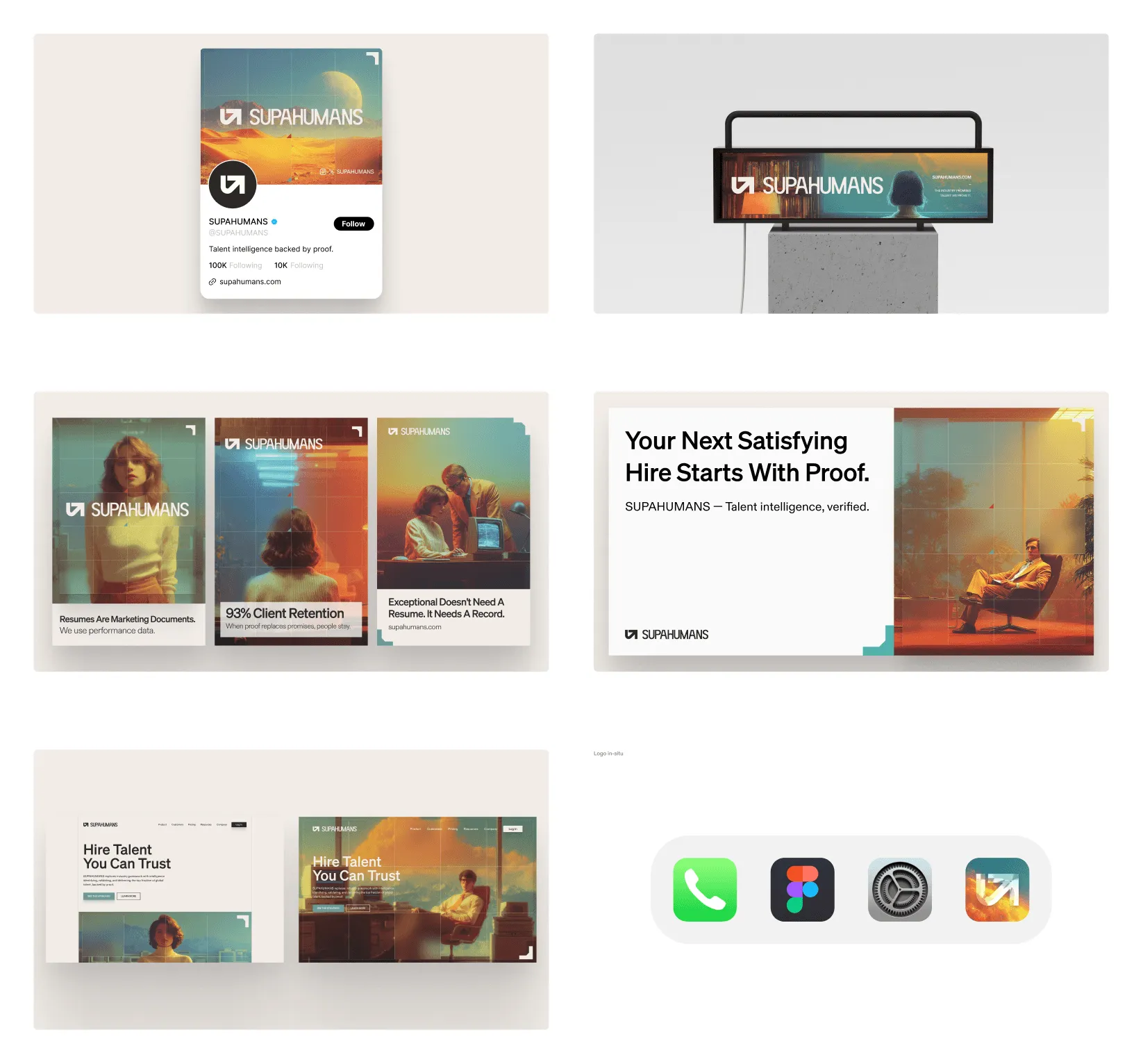
A brand built to stand outside its category has to be consistent everywhere or the effect collapses, so the work ran as one connected system, from the category point of view down to the wordmark.
Brand strategy: positioning, narrative, and category point of view
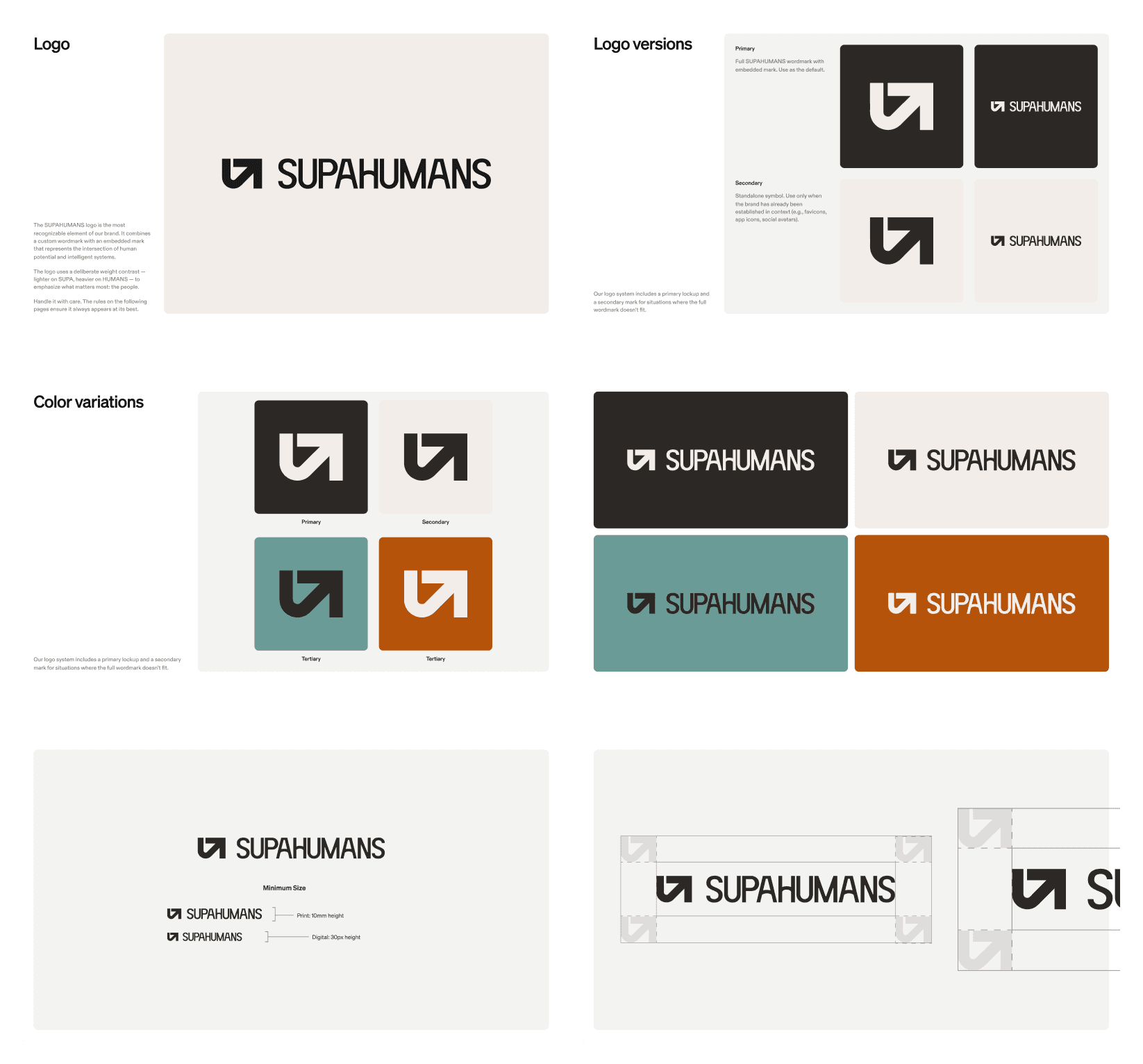
Brand identity: logo, wordmark, typography system, and color
Visual identity system applied across key surfaces
The Takeaway
When every company in a category reaches for the same image, that image stops describing any of them. SUPAHUMANS won distinction by refusing the visual the whole category had agreed to share.
Credits — Strategy, Design: Daniel G. Bright, BrightStudios®
The system
Brand strategy, identity, and logo system that takes an AI talent platform out of the staffing aesthetic entirely.
The audit will show you your gap. Book it.
Fixed $2,000 · 5 days · credited toward any project